Why Howard Marks says you’re making a big mistake

Howard Marks says investors must ignore manic depressive markets and focus on the bigger picture. Rates will be higher for longer and that will bring pain – and opportunity.

James Thomson

Why Howard Marks says you’re making a big mistake

September 5, 2024
Howard Marks says investors must ignore manic depressive markets and focus on the bigger picture. Rates will be higher for longer and that will bring pain – and opportunity.
Read Transcript

Wall Street legend Howard Marks has commandeered my notebook.

The billionaire founder of Oaktree Capital Management is sketching a graph (see below) that shows how equity market valuations oscillate between very rich and very poor, as investors swing from euphoria to despair.

‍This rollercoaster provides endless fodder for traders and the media, but it also demonstrates how regularly valuations move away from fair value.‍

“Most people want to know where the market is at a given point in time. Is it rich? Is it cheap? But that leads to too much short-term thinking and hyperactivity for naught,” Marks says.

Mr Market, he says, is a manic depressive – and investors shouldn’t get caught in the same trap.

So, forget trying to pinpoint when the Federal Reserve will cut interest rates. Don’t worry about trying to predict where US employment data will come in on Friday night. It’s the direction of travel that matters, Marks says, not the details.

‍“Oaktree doesn’t have an economist on staff; we don’t invite economists in for a chat. We just think that figuring out what’s in store in the macro cannot be a source of superior results for us – or for pretty much anybody else,” he says.

“The world is an uncertain place. One more piece of data is not going to make you smarter. Attaching importance to one report is really just a mistake.

‍“The most important thing for most people who have some money to invest is to be in the market on a steady basis – and not screw it up.

‍“If you get in, get out; get in, get out; get in, get out – you’re unlikely to have a return on all that energy.”

‍Marks argues that markets are trading in what he calls the “zone of reasonableness”. Yes, equities markets are reasonably expensive, but they’re not at the extremes we saw in the dotcom boom. Yes, money is flooding into private credit, “but it’s not crazy – I’ve seen crazy”.

‍The US economy is proving relatively resilient, and the Federal Reserve will have room to bring down interest rates as inflation falls. But crucially, Marks expects the Fed funds rate – sitting between 5.25 per cent and 5.5 per cent – will remain above 3 per cent.

‍History says rates at this level are hardly abnormal. But again, it’s the direction of travel that matters. There will be no retreat to the ultra-low levels that investors got used to following the global financial crisis, and that will cause pain.

‍So, while Marks says the global equity market rally is evidence that “the optimists have won the tug of war over the last couple of years”, he believes there will be a level of distress that an opportunistic investor such as Oaktree can take advantage of.

‍“We think that there are still some tough times ahead, primarily for our world,” he says. “There’ll be financing shortfalls, there’ll be defaults, bankruptcies, higher interest costs, all those things.

‍“We’re not in the easy times any more. We’re in moderate times, normal times.”

‍Marks is famous in global markets for his public memos to Oaktree clients, which are a unique mix of insight, history and commonsense. He eschews big calls and instead urges investors to stay the course; in many ways, he is the personification of the zone of reasonableness.

‍He says the story of the second half of the 20th century is one of “the best periods known to man”, where a combination of positive social changes, advances in technology and management techniques, and the advent of globalisation created a tide of growth that lifted all boats.

‍“But it’s not going to be the same in the first half of the 21st century,” Marks argues.

‍Most countries are not going to grow as quickly as investors have come to expect, in large part due to the demographic challenges created by ageing populations.

‍Inflation is likely to remain higher for longer, so a return to a world of declining interest rates, ultra-low interest rates, or both, is unlikely.

‍Again, this is hardly a cause for panic – it will throw up as many opportunities for investors as it does challenges. But the key is to realise that the environment has changed, and investors must too.

‍“Einstein is famous for having said that the definition of insanity is doing the same thing over and over and expecting a different result,” Marks says.

‍“I think another definition of insanity is doing the same thing in a different environment and expecting the same result. The environment we operate and live in is extremely influential, and I believe it’s going to be different than what we saw.”

‍When Chanticleer asks Marks to comment on the rise and rise of private capital – a huge topic of interest after this week’s AirTrunk deal – he is far more sanguine than commentators who see an irreversible shift in global markets.

‍“I think reversion to the mean is a very strong force,” he says.

‍Marks points out that if investors were to lose money in private equity and/or be caught out by a lack of liquidity in this sector, then there could be a renewed preference for public markets.

‍Similarly, while the boom in private credit – which has grown from about $US250 billion in 2007 to about $US1.5 trillion ($2.24 trillion) today – has been very rapid, the sector remains in its infancy and not immune from problems.

‍“When something is new – and private lending is still new – and it’s successful for a while, everybody jumps on board, and they can’t imagine how it’s going to turn out to be a problem,” he says.

‍“So, maybe they do it to excess and without caution – and that’s not a good formula.”

‍Marks sees opportunities for Oaktree in the explosive growth of private capital. In part, this is a story of the structure of the sector.

‍“When you do things in private and without liquidity, the swings can be even more volatile, yeah, which gives the opportunist more opportunities.”

‍But it also reflects the fact that a big chunk of the growth in private credit has taken place against the backdrop of low interest rates and steady economic conditions.

‍He retains faith in the banking adage that the worst loans are made in the best times.

‍When loans made between 2015 and 2020 mature in 2026 and 2027, borrowers are likely to find they’re facing much higher rates; Marks says a business that borrowed $US900 million in 2017 at an interest rate of 5 per cent, for example, may find they’re offered $US500 million at 9 per cent this time around.

‍Oaktree has seen demand for what Marks calls “rescue loans” increase in the last few years, although “with optimism in the majority and money available, the need has declined” more recently.

‍“But we think it’ll increase again. Some of those loans were too optimistic. Some of them will present problems in the years ahead. That’s our thesis.”

‍Marks is already working on his next memo – it’s working title is Shall we repeal the laws of economics? – and he’s looking ahead to the US election with more than a touch of trepidation.

‍“I’m very worried about the election because I have a sneaking suspicion one of them will win,” he jokes.

‍But he has no plans for retirement. His role at Oaktree now is to think about the big picture, and it’s an intellectual challenge that still excites him.

‍“It’s fun to win, and it’s also fun to challenge yourself. That’s what investing is.”

This article was originally posted by The Australian Financial Review here.

Licensed by Copyright Agency. You must not copy this work without permission.

Wall Street legend Howard Marks has commandeered my notebook.

The billionaire founder of Oaktree Capital Management is sketching a graph (see below) that shows how equity market valuations oscillate between very rich and very poor, as investors swing from euphoria to despair.

‍This rollercoaster provides endless fodder for traders and the media, but it also demonstrates how regularly valuations move away from fair value.‍

“Most people want to know where the market is at a given point in time. Is it rich? Is it cheap? But that leads to too much short-term thinking and hyperactivity for naught,” Marks says.

Mr Market, he says, is a manic depressive – and investors shouldn’t get caught in the same trap.

So, forget trying to pinpoint when the Federal Reserve will cut interest rates. Don’t worry about trying to predict where US employment data will come in on Friday night. It’s the direction of travel that matters, Marks says, not the details.

‍“Oaktree doesn’t have an economist on staff; we don’t invite economists in for a chat. We just think that figuring out what’s in store in the macro cannot be a source of superior results for us – or for pretty much anybody else,” he says.

“The world is an uncertain place. One more piece of data is not going to make you smarter. Attaching importance to one report is really just a mistake.

‍“The most important thing for most people who have some money to invest is to be in the market on a steady basis – and not screw it up.

‍“If you get in, get out; get in, get out; get in, get out – you’re unlikely to have a return on all that energy.”

‍Marks argues that markets are trading in what he calls the “zone of reasonableness”. Yes, equities markets are reasonably expensive, but they’re not at the extremes we saw in the dotcom boom. Yes, money is flooding into private credit, “but it’s not crazy – I’ve seen crazy”.

‍The US economy is proving relatively resilient, and the Federal Reserve will have room to bring down interest rates as inflation falls. But crucially, Marks expects the Fed funds rate – sitting between 5.25 per cent and 5.5 per cent – will remain above 3 per cent.

‍History says rates at this level are hardly abnormal. But again, it’s the direction of travel that matters. There will be no retreat to the ultra-low levels that investors got used to following the global financial crisis, and that will cause pain.

‍So, while Marks says the global equity market rally is evidence that “the optimists have won the tug of war over the last couple of years”, he believes there will be a level of distress that an opportunistic investor such as Oaktree can take advantage of.

‍“We think that there are still some tough times ahead, primarily for our world,” he says. “There’ll be financing shortfalls, there’ll be defaults, bankruptcies, higher interest costs, all those things.

‍“We’re not in the easy times any more. We’re in moderate times, normal times.”

‍Marks is famous in global markets for his public memos to Oaktree clients, which are a unique mix of insight, history and commonsense. He eschews big calls and instead urges investors to stay the course; in many ways, he is the personification of the zone of reasonableness.

‍He says the story of the second half of the 20th century is one of “the best periods known to man”, where a combination of positive social changes, advances in technology and management techniques, and the advent of globalisation created a tide of growth that lifted all boats.

‍“But it’s not going to be the same in the first half of the 21st century,” Marks argues.

‍Most countries are not going to grow as quickly as investors have come to expect, in large part due to the demographic challenges created by ageing populations.

‍Inflation is likely to remain higher for longer, so a return to a world of declining interest rates, ultra-low interest rates, or both, is unlikely.

‍Again, this is hardly a cause for panic – it will throw up as many opportunities for investors as it does challenges. But the key is to realise that the environment has changed, and investors must too.

‍“Einstein is famous for having said that the definition of insanity is doing the same thing over and over and expecting a different result,” Marks says.

‍“I think another definition of insanity is doing the same thing in a different environment and expecting the same result. The environment we operate and live in is extremely influential, and I believe it’s going to be different than what we saw.”

‍When Chanticleer asks Marks to comment on the rise and rise of private capital – a huge topic of interest after this week’s AirTrunk deal – he is far more sanguine than commentators who see an irreversible shift in global markets.

‍“I think reversion to the mean is a very strong force,” he says.

‍Marks points out that if investors were to lose money in private equity and/or be caught out by a lack of liquidity in this sector, then there could be a renewed preference for public markets.

‍Similarly, while the boom in private credit – which has grown from about $US250 billion in 2007 to about $US1.5 trillion ($2.24 trillion) today – has been very rapid, the sector remains in its infancy and not immune from problems.

‍“When something is new – and private lending is still new – and it’s successful for a while, everybody jumps on board, and they can’t imagine how it’s going to turn out to be a problem,” he says.

‍“So, maybe they do it to excess and without caution – and that’s not a good formula.”

‍Marks sees opportunities for Oaktree in the explosive growth of private capital. In part, this is a story of the structure of the sector.

‍“When you do things in private and without liquidity, the swings can be even more volatile, yeah, which gives the opportunist more opportunities.”

‍But it also reflects the fact that a big chunk of the growth in private credit has taken place against the backdrop of low interest rates and steady economic conditions.

‍He retains faith in the banking adage that the worst loans are made in the best times.

‍When loans made between 2015 and 2020 mature in 2026 and 2027, borrowers are likely to find they’re facing much higher rates; Marks says a business that borrowed $US900 million in 2017 at an interest rate of 5 per cent, for example, may find they’re offered $US500 million at 9 per cent this time around.

‍Oaktree has seen demand for what Marks calls “rescue loans” increase in the last few years, although “with optimism in the majority and money available, the need has declined” more recently.

‍“But we think it’ll increase again. Some of those loans were too optimistic. Some of them will present problems in the years ahead. That’s our thesis.”

‍Marks is already working on his next memo – it’s working title is Shall we repeal the laws of economics? – and he’s looking ahead to the US election with more than a touch of trepidation.

‍“I’m very worried about the election because I have a sneaking suspicion one of them will win,” he jokes.

‍But he has no plans for retirement. His role at Oaktree now is to think about the big picture, and it’s an intellectual challenge that still excites him.

‍“It’s fun to win, and it’s also fun to challenge yourself. That’s what investing is.”

This article was originally posted by The Australian Financial Review here.

Licensed by Copyright Agency. You must not copy this work without permission.

Disclaimer: This material has been prepared by Australian Financial Review, published on Sep 05, 2024. HM1 is not responsible for the content of linked websites or content prepared by third party. The inclusion of these links and third-party content does not in any way imply any form of endorsement by HM1 of the products or services provided by persons or organisations who are responsible for the linked websites and third-party content. This information is for general information only and does not consider the objectives, financial situation or needs of any person. Before making an investment decision, you should read the relevant disclosure document (if appropriate) and seek professional advice to determine whether the investment and information is suitable for you.

facebook
linkedin
All
Thank you! Your submission has been received!
Oops! Something went wrong while submitting the form.
March 14, 2025

$1.4 million boost for SA medical research

South Australian medical research will receive a $1.4 million cash injection, as a direct result of a major investment and philanthropy conference held in Adelaide.

Read More
Anthony Scaramucci’s time in the White House was brief but memorable. APAnthony Scaramucci’s time in the White House was brief but memorable. APAnthony Scaramucci’s time in the White House was brief but memorable. APAnthony Scaramucci’s time in the White House was brief but memorable. AP
May 19, 2025

Why ‘The Mooch’ thinks Trump is more dangerous this time around

Anthony Scaramucci says Trump has fewer constraints on his worst instincts in his second administration. But he still gets bored easily.

Read More
Image caption: Anthony “The Mooch” Scaramucci at the New York headquarters of his SkyBridge Capital last week. Picture: Jaclyn LichtImage caption: Anthony “The Mooch” Scaramucci at the New York headquarters of his SkyBridge Capital last week. Picture: Jaclyn LichtImage caption: Anthony “The Mooch” Scaramucci at the New York headquarters of his SkyBridge Capital last week. Picture: Jaclyn LichtImage caption: Anthony “The Mooch” Scaramucci at the New York headquarters of his SkyBridge Capital last week. Picture: Jaclyn Licht
May 19, 2025

My biggest mistake: Anthony Scaramucci on what makes Donald Trump tick

On Elon Musk, money and the White House, fast-talking Wall Street hedge fund manager and former Trump communications director Anthony Scaramucci tells it as he sees it.

Read More
A bull case for Bitcoin even as it trades near record levels. Picture: AFPA bull case for Bitcoin even as it trades near record levels. Picture: AFPA bull case for Bitcoin even as it trades near record levels. Picture: AFPA bull case for Bitcoin even as it trades near record levels. Picture: AFP
May 19, 2025

Bitcoin ‘on track’ for $US200,000: Anthony Scaramucci

Bitcoin could hit as much as $US200,000 ($311,000) by the end of this year, fuelled by surging inflows into exchange-traded funds and Donald Trump’s erratic policymaking.

Read More
Anthony Scaramucci says America has no choice but to lower tariffs on China further. Jaclyn LichtAnthony Scaramucci says America has no choice but to lower tariffs on China further. Jaclyn LichtAnthony Scaramucci says America has no choice but to lower tariffs on China further. Jaclyn LichtAnthony Scaramucci says America has no choice but to lower tariffs on China further. Jaclyn Licht
May 19, 2025

‘The Mooch’ says Trump will have to cut China tariffs below 10pc

Scaramucci, who is best known as The Mooch, is the first big-name global investor to be confirmed for the Sohn Hearts & Minds conference in Sydney in November.

Read More
Matthew McLennan in his office at First Eagle Investments in New York. Picture: Jaclyn LichtMatthew McLennan in his office at First Eagle Investments in New York. Picture: Jaclyn LichtMatthew McLennan in his office at First Eagle Investments in New York. Picture: Jaclyn LichtMatthew McLennan in his office at First Eagle Investments in New York. Picture: Jaclyn Licht
July 7, 2025

A golden year for Wall Street’s Australian stock picker

Matthew McLennan’s $14.5 billion position in gold bars and miners paid off handsomely for First Eagle this year. But he insists the precious metal still has room to run.

Read More
Stillpoint Investments founder and chief investment officer Eric Wong. Picture: Jaclyn LichtStillpoint Investments founder and chief investment officer Eric Wong. Picture: Jaclyn LichtStillpoint Investments founder and chief investment officer Eric Wong. Picture: Jaclyn LichtStillpoint Investments founder and chief investment officer Eric Wong. Picture: Jaclyn Licht
September 25, 2025

Stillpoint founder Eric Wong reveals major China tech investment strategy

Eric Wong will present his investment case at the Sohn Hearts & Minds conference at the Sydney Opera House on Friday, November 14.

Read More
October 1, 2025

Billionaire hedge fund manager enacts ‘little short’ on the market

Investing veteran Lord Michael Hintze says he’s taking out insurance against expensive debt and equity markets that are being propelled by passive flows.

Read More
October 1, 2025

Hedge fund guru Michael Hintze can't out-trade machines but he can still 'out-invest' them

Billionaire hedge fund manager Michael Hintze says the world is more dangerous than he has ever seen, artificial intelligence is stifling people’s ability to learn and process information.

Read More
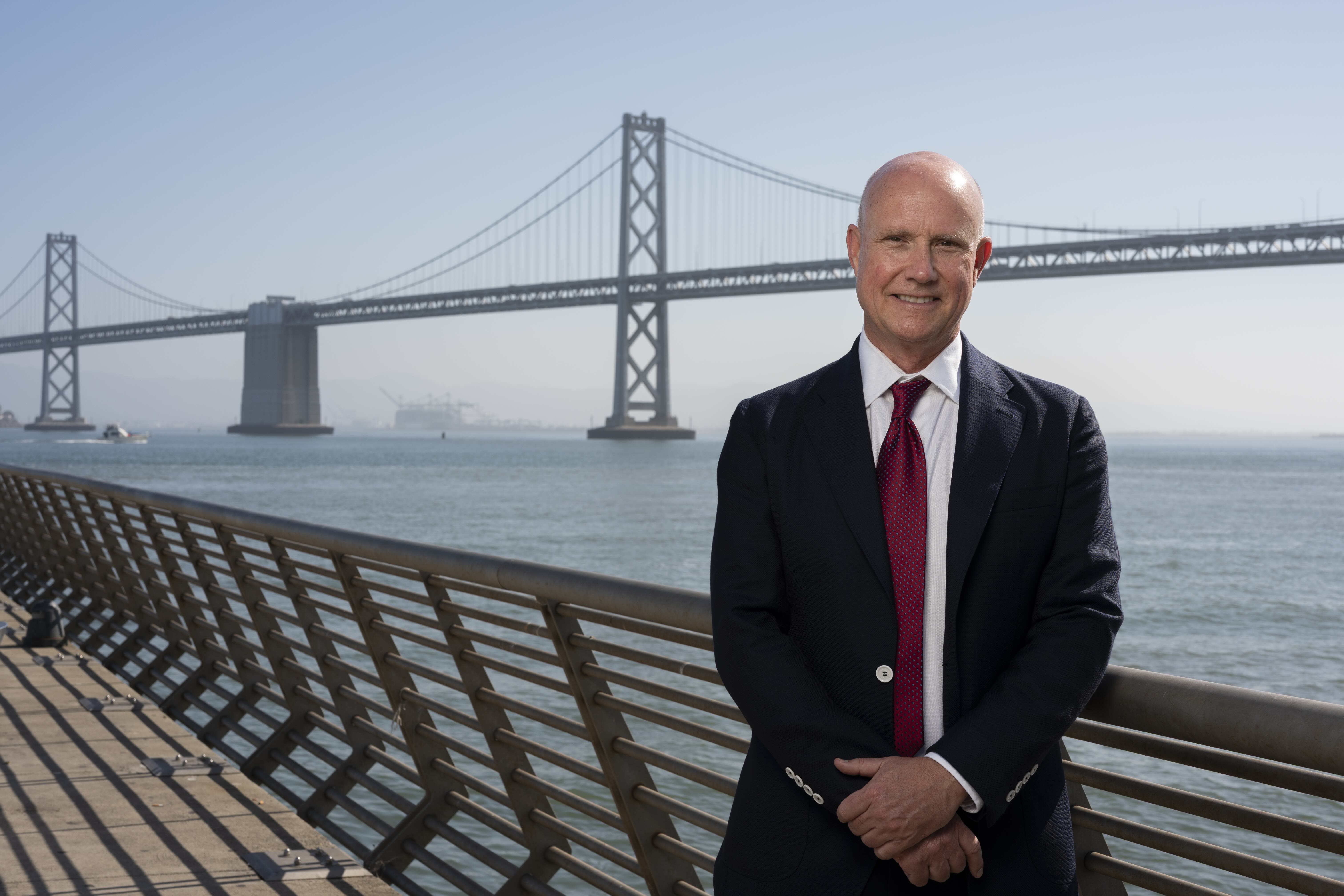
Marathon Resource Advisors founder and chief investment officer Robert Mullin in San Francisco.Marathon Resource Advisors founder and chief investment officer Robert Mullin in San Francisco.Marathon Resource Advisors founder and chief investment officer Robert Mullin in San Francisco.Marathon Resource Advisors founder and chief investment officer Robert Mullin in San Francisco.
October 5, 2025

Marathon CIO Robert Mullin reveals why gold stocks are still undervalued

The son of a stockbroker, Mr Mullin has more than 30 years' investing experience and is chief investment officer at Marathon Resource Advisors in San Francisco, a company he founded.

Read More
First Eagle Investments co-head of global value Matthew McLennan. Picture: Jaclyn LichtFirst Eagle Investments co-head of global value Matthew McLennan. Picture: Jaclyn LichtFirst Eagle Investments co-head of global value Matthew McLennan. Picture: Jaclyn LichtFirst Eagle Investments co-head of global value Matthew McLennan. Picture: Jaclyn Licht
October 6, 2025

First Eagle’s Matthew McLennan on the monetary force that could be ‘rocket fuel’ for the Australian dollar

Matthew McLennan, the co-head of the global value team and portfolio manager at the $US161bn ($243bn) First Eagle Investments, stormed the market with a bullish bet on gold.

Read More
October 10, 2025

Anthony Scaramucci’s advice to our PM is to seek his Canadian counterpart’s counsel

Beyond Wall Street, The Mooch is better known for his cutting takes on US politics in the popular podcast The Rest is Politics: US, which he hosts with BBC’s long-term North American correspondent Katty Kay.

Read More
October 19, 2025

Munro Partners' Qiao Ma reveals AI investment strategy

Qiao Ma has a simple test for spotting the investment opportunities that will define the next decade. Take the technology apart and see what’s inside.

Read More
October 21, 2025

Meet the 2025 Conference Managers

Following a global search, the Conference Fund Manager Selection Committee is pleased to share ten new managers for 2025.

Read More
October 31, 2025

The 42pc gain that shows why Sohn is a stock picker’s delight

It turns out you could have outperformed the seemingly unstoppable magnificent seven tech stocks if you simply acted on the 11 stock picks at Sohn last year.

Read More