The Wellcome Trust’s Nick Moakes made a 100-year bet. It’s paying off

Chief Investment Officer, Nick Moakes raised almost $3 billion at ultra-low rates. Sometimes the long view can be the most profitable.

Jonathan Shapiro

The Wellcome Trust’s Nick Moakes made a 100-year bet. It’s paying off

September 9, 2024
Chief Investment Officer, Nick Moakes raised almost $3 billion at ultra-low rates. Sometimes the long view can be the most profitable.
Read Transcript

The chief investment officer of the massive charitable fund raised almost $3 billion at ultra-low rates. Sometimes the long view can be the most profitable.

The £36.8 billion ($72 billion) Wellcome Trust’s smartest trade over the last decade wasn’t what it bought but rather what it sold.

With interest rates at their lowest point in a generation, the charitable foundation – started in 1936 with the wealth of pharmaceuticals magnate Henry Wellcome – issued a £750 million, 100-year bond in 2018 and then later a 50-year bond of the same amount in 2021.

The trust locked in interest rates of just 2.5 and 1.5 per cent.

‍“It was a moment in time for us,” Wellcome Trust’s chief investment officer Nick Moakes says. “Our fixed income was eye-wateringly overvalued at that point.”

Indeed. Those securities change hands at 39¢ and 50¢ in the dollar to reflect the upward move in interest rates and the decades of payments that have to be repriced.

But for the Wellcome Trust, that cheap long-term financing has “created vast amounts of value”, says Moakes.

He is among the headline acts at this year’s Sohn Hearts & Minds investment conference, which will be held in Adelaide for the first time. Just 24 hours before he announced his retirement, Moakes offered some insights he has garnered from two decades of running the monster portfolio.

Taking the long view

“If you take a 50-year view on this stuff, which effectively an endowment needs to do, this is noise,” Moakes says of investing Wellcome’s funds. It is the largest financier of scientific research in the United Kingdom after the government – into a sharemarket powered by big tech firms.

Moakes joined Wellcome in 2007, which had £15.1 billion in assets. He took over as CIO in 2017. The portfolio stands at £36.8 billion now, and more than £15 billion has been awarded towards funding health-related scientific projects, including in Australia.

In December, the trust awarded $5.4 million to a University of Sydney team to study how disruptive sleeping patterns could cause depression and mood swings.

Last month, it handed $4.9 million to a University of Melbourne team to study the impact of climate on farmers in Kyrgyzstan in Central Asia.

“What sets us apart from most people running money is that we don’t have any clients,” Moakes says. But that does not make the job simple. Although Wellcome determines how much risk it will take, Moakes says this requires watertight governance to make sure the best decisions are made.

Innovation equals productivity growth equals outsized returns. That equation isn’t going to change, in my view.
— Nick Moakes, CIO of the Wellcome Trust

Wellcome must also stay nimble and liquid enough if a call comes to fund a scientific investment. “I don’t know when the organisation is going to come to us and say that we need to spend a billion dollars really quickly because we can make a huge change to health outcomes,” Moakes says.

Moakes is a globally focused investor but has a deep affinity with Australia and the cause of financing medical research that the Sohn Hearts & Minds event has championed. His grandfather, H.E. Graves, moved to Australia in 1925, spending a decade in the West Australian police force.

Graves returned to Britain in 1935 – having penned a memoir, Who Rides – just in time for the outbreak of World War II. It was also the same time that Henry Wellcome, whose company eventually became part of GlaxoSmithKline, one of the world’s largest pharmaceutical groups, was creating the trust.

For those reasons, Moakes, who has spoken at Sohn’s London event is only too happy to book a flight to Adelaide and make his presentation in November.

The 89-year-old Wellcome Trust is steeped in history and the fund is set up to think and invest for the long run.

Moakes says this translates into an allocation of about 80 per cent to be invested in some form of equity – be it private or public. The high weighting to stocks, he says, is partly a function of the lessons learnt during the 1970s and ’80s of the wealth destruction that high inflation can cause.

‘Tyranny of benchmarks’
“That has dominated my mindset,” he says. “If you’re going to defray the risk of inflation, you need to own real assets. You need to own things where the value of the cash flows of the underlying instruments are going to grow with nominal GDP, rather than be fixed.”

But Moakes is happy not to be in the world of traditional funds management, where outperforming market indices dominated by few companies is becoming more difficult. He calls it the “tyranny of benchmarks,” as the fate of stocks such as Nvidia, Apple and Amazon determine whether fund managers meet performance targets.

“They’re fantastic companies. They’ve been built for nothing, and we’ve owned some of them in quite large sizes,” Moakes says. “But to have a portfolio which is completely focused on those things, which is what you’ve needed, puts you at a real risk of things just reversing. That’s a risk that I don’t think a responsible asset owner is going to take on.”

Where there has been a swift reversal is in private equity and venture capital. Last year, the fund’s £12.8 billion private equity portfolio took a 10.4 per cent hit mainly because of venture-related downward revaluations.

Moakes is confident those venture bets will pay off over the long run.

“The reason we have such a lot in early-stage venture investments is that innovation is increasingly going to drive the global economy,” he says. “The rate of innovation has just been accelerating. That tends to drive you more towards the US which has been the most innovative economy globally.


“Innovation equals productivity growth equals outsized returns. That equation isn’t going to change, in my view.”

Wellcome has also allocated money to hedge funds in the hope they can deliver higher returns. “It’s smart people doing things that we cannot do in a structure that controls the risk for us,” Moakes says.

But do hedge funds deliver the results relative to the fees they charge?

“If you look back through our exposures over time, you will see that in September 2008 we had 23 per cent of our assets in hedge funds. As of the end of last financial year, that was about 10 per cent,” he says.

On the other end of the spectrum, the trust holds about 9 per cent of its assets in cash. “That, in part, reflects the fact that we’ve struggled near term to find things that we want to deploy money into,” the CIO adds.

A cash holding is usually a drag on investment returns, but the overnight cash rate in the UK is 5 per cent. That is double the 100-year rate that Moakes helped lock in less than a decade ago.

This article was originally posted by The Australian Financial Review here

Licensed by Copyright Agency. You must not copy this work without permission.

Disclaimer: This material has been prepared by The Australian Financial Review, published on 9 September 2024. HM1 is not responsible for the content of linked websites or content prepared by third party. The inclusion of these links and third-party content does not in any way imply any form of endorsement by HM1 of the products or services provided by persons or organisations who are responsible for the linked websites and third-party content. This information is for general information only and does not consider the objectives, financial situation or needs of any person. Before making an investment decision, you should read the relevant disclosure document (if appropriate) and seek professional advice to determine whether the investment and information is suitable for you.
The chief investment officer of the massive charitable fund raised almost $3 billion at ultra-low rates. Sometimes the long view can be the most profitable.

The £36.8 billion ($72 billion) Wellcome Trust’s smartest trade over the last decade wasn’t what it bought but rather what it sold.

With interest rates at their lowest point in a generation, the charitable foundation – started in 1936 with the wealth of pharmaceuticals magnate Henry Wellcome – issued a £750 million, 100-year bond in 2018 and then later a 50-year bond of the same amount in 2021.

The trust locked in interest rates of just 2.5 and 1.5 per cent.

‍“It was a moment in time for us,” Wellcome Trust’s chief investment officer Nick Moakes says. “Our fixed income was eye-wateringly overvalued at that point.”

Indeed. Those securities change hands at 39¢ and 50¢ in the dollar to reflect the upward move in interest rates and the decades of payments that have to be repriced.

But for the Wellcome Trust, that cheap long-term financing has “created vast amounts of value”, says Moakes.

He is among the headline acts at this year’s Sohn Hearts & Minds investment conference, which will be held in Adelaide for the first time. Just 24 hours before he announced his retirement, Moakes offered some insights he has garnered from two decades of running the monster portfolio.

Taking the long view

“If you take a 50-year view on this stuff, which effectively an endowment needs to do, this is noise,” Moakes says of investing Wellcome’s funds. It is the largest financier of scientific research in the United Kingdom after the government – into a sharemarket powered by big tech firms.

Moakes joined Wellcome in 2007, which had £15.1 billion in assets. He took over as CIO in 2017. The portfolio stands at £36.8 billion now, and more than £15 billion has been awarded towards funding health-related scientific projects, including in Australia.

In December, the trust awarded $5.4 million to a University of Sydney team to study how disruptive sleeping patterns could cause depression and mood swings.

Last month, it handed $4.9 million to a University of Melbourne team to study the impact of climate on farmers in Kyrgyzstan in Central Asia.

“What sets us apart from most people running money is that we don’t have any clients,” Moakes says. But that does not make the job simple. Although Wellcome determines how much risk it will take, Moakes says this requires watertight governance to make sure the best decisions are made.

Innovation equals productivity growth equals outsized returns. That equation isn’t going to change, in my view.
— Nick Moakes, CIO of the Wellcome Trust

Wellcome must also stay nimble and liquid enough if a call comes to fund a scientific investment. “I don’t know when the organisation is going to come to us and say that we need to spend a billion dollars really quickly because we can make a huge change to health outcomes,” Moakes says.

Moakes is a globally focused investor but has a deep affinity with Australia and the cause of financing medical research that the Sohn Hearts & Minds event has championed. His grandfather, H.E. Graves, moved to Australia in 1925, spending a decade in the West Australian police force.

Graves returned to Britain in 1935 – having penned a memoir, Who Rides – just in time for the outbreak of World War II. It was also the same time that Henry Wellcome, whose company eventually became part of GlaxoSmithKline, one of the world’s largest pharmaceutical groups, was creating the trust.

For those reasons, Moakes, who has spoken at Sohn’s London event is only too happy to book a flight to Adelaide and make his presentation in November.

The 89-year-old Wellcome Trust is steeped in history and the fund is set up to think and invest for the long run.

Moakes says this translates into an allocation of about 80 per cent to be invested in some form of equity – be it private or public. The high weighting to stocks, he says, is partly a function of the lessons learnt during the 1970s and ’80s of the wealth destruction that high inflation can cause.

‘Tyranny of benchmarks’
“That has dominated my mindset,” he says. “If you’re going to defray the risk of inflation, you need to own real assets. You need to own things where the value of the cash flows of the underlying instruments are going to grow with nominal GDP, rather than be fixed.”

But Moakes is happy not to be in the world of traditional funds management, where outperforming market indices dominated by few companies is becoming more difficult. He calls it the “tyranny of benchmarks,” as the fate of stocks such as Nvidia, Apple and Amazon determine whether fund managers meet performance targets.

“They’re fantastic companies. They’ve been built for nothing, and we’ve owned some of them in quite large sizes,” Moakes says. “But to have a portfolio which is completely focused on those things, which is what you’ve needed, puts you at a real risk of things just reversing. That’s a risk that I don’t think a responsible asset owner is going to take on.”

Where there has been a swift reversal is in private equity and venture capital. Last year, the fund’s £12.8 billion private equity portfolio took a 10.4 per cent hit mainly because of venture-related downward revaluations.

Moakes is confident those venture bets will pay off over the long run.

“The reason we have such a lot in early-stage venture investments is that innovation is increasingly going to drive the global economy,” he says. “The rate of innovation has just been accelerating. That tends to drive you more towards the US which has been the most innovative economy globally.


“Innovation equals productivity growth equals outsized returns. That equation isn’t going to change, in my view.”

Wellcome has also allocated money to hedge funds in the hope they can deliver higher returns. “It’s smart people doing things that we cannot do in a structure that controls the risk for us,” Moakes says.

But do hedge funds deliver the results relative to the fees they charge?

“If you look back through our exposures over time, you will see that in September 2008 we had 23 per cent of our assets in hedge funds. As of the end of last financial year, that was about 10 per cent,” he says.

On the other end of the spectrum, the trust holds about 9 per cent of its assets in cash. “That, in part, reflects the fact that we’ve struggled near term to find things that we want to deploy money into,” the CIO adds.

A cash holding is usually a drag on investment returns, but the overnight cash rate in the UK is 5 per cent. That is double the 100-year rate that Moakes helped lock in less than a decade ago.

This article was originally posted by The Australian Financial Review here

Licensed by Copyright Agency. You must not copy this work without permission.

Disclaimer: This material has been prepared by The Australian Financial Review, published on 9 September 2024. HM1 is not responsible for the content of linked websites or content prepared by third party. The inclusion of these links and third-party content does not in any way imply any form of endorsement by HM1 of the products or services provided by persons or organisations who are responsible for the linked websites and third-party content. This information is for general information only and does not consider the objectives, financial situation or needs of any person. Before making an investment decision, you should read the relevant disclosure document (if appropriate) and seek professional advice to determine whether the investment and information is suitable for you.

Disclaimer: This material has been prepared by Australian Financial Review, published on Sep 09, 2024. HM1 is not responsible for the content of linked websites or content prepared by third party. The inclusion of these links and third-party content does not in any way imply any form of endorsement by HM1 of the products or services provided by persons or organisations who are responsible for the linked websites and third-party content. This information is for general information only and does not consider the objectives, financial situation or needs of any person. Before making an investment decision, you should read the relevant disclosure document (if appropriate) and seek professional advice to determine whether the investment and information is suitable for you.

facebook
linkedin
All
Thank you! Your submission has been received!
Oops! Something went wrong while submitting the form.
March 14, 2025

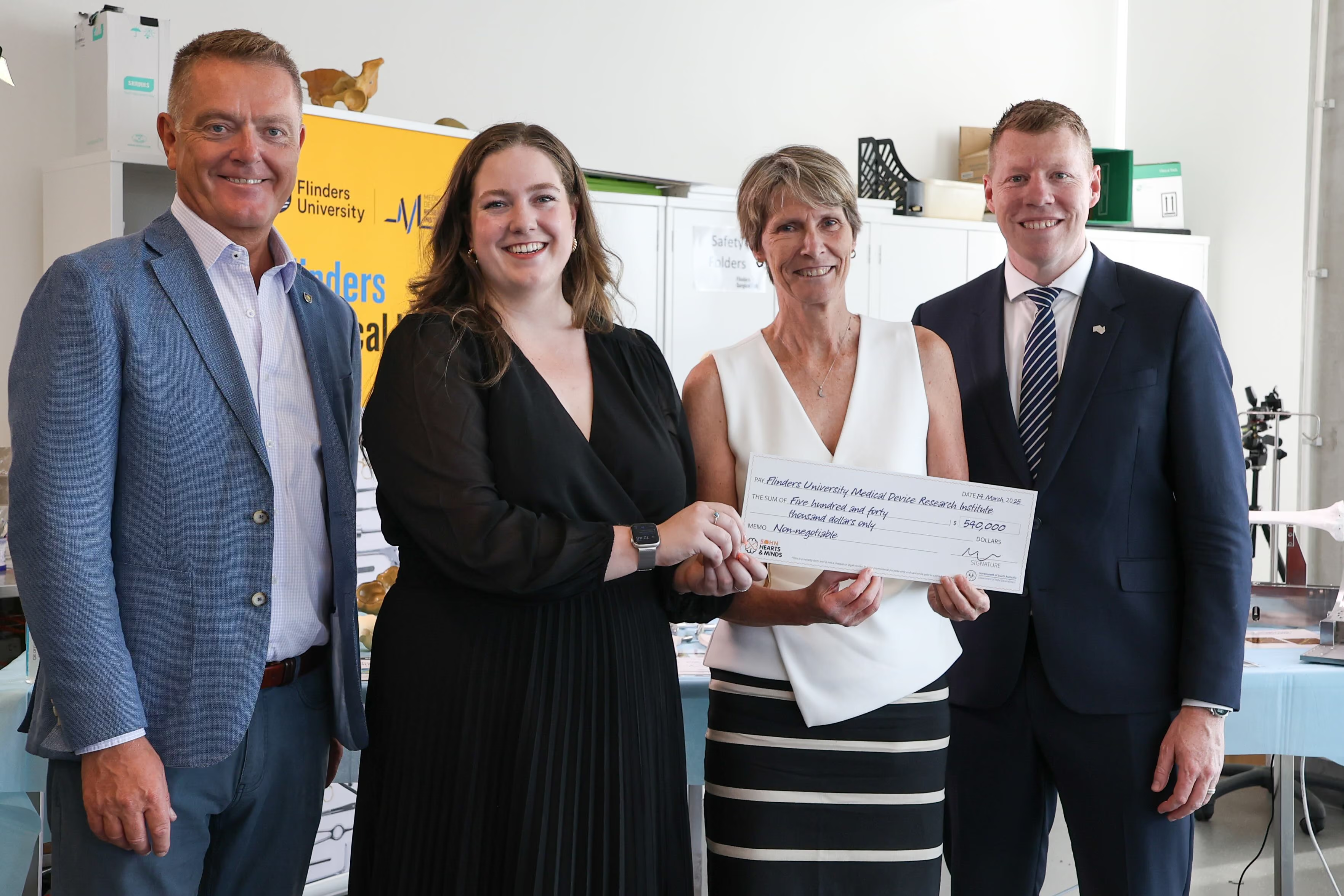
$1.4 million boost for SA medical research

South Australian medical research will receive a $1.4 million cash injection, as a direct result of a major investment and philanthropy conference held in Adelaide.

Read More
Anthony Scaramucci’s time in the White House was brief but memorable. APAnthony Scaramucci’s time in the White House was brief but memorable. APAnthony Scaramucci’s time in the White House was brief but memorable. APAnthony Scaramucci’s time in the White House was brief but memorable. AP
May 19, 2025

Why ‘The Mooch’ thinks Trump is more dangerous this time around

Anthony Scaramucci says Trump has fewer constraints on his worst instincts in his second administration. But he still gets bored easily.

Read More
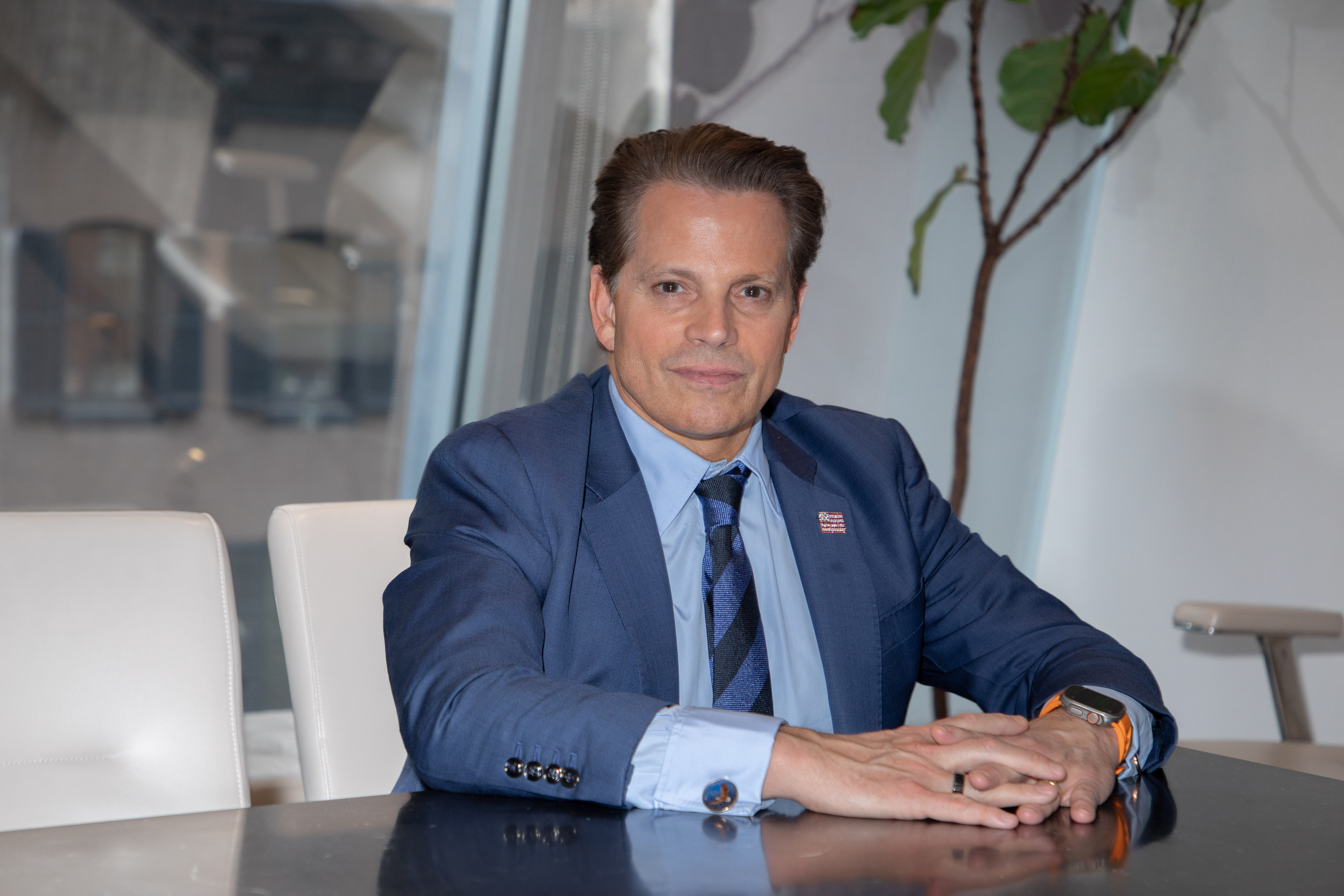
Image caption: Anthony “The Mooch” Scaramucci at the New York headquarters of his SkyBridge Capital last week. Picture: Jaclyn LichtImage caption: Anthony “The Mooch” Scaramucci at the New York headquarters of his SkyBridge Capital last week. Picture: Jaclyn LichtImage caption: Anthony “The Mooch” Scaramucci at the New York headquarters of his SkyBridge Capital last week. Picture: Jaclyn LichtImage caption: Anthony “The Mooch” Scaramucci at the New York headquarters of his SkyBridge Capital last week. Picture: Jaclyn Licht
May 19, 2025

My biggest mistake: Anthony Scaramucci on what makes Donald Trump tick

On Elon Musk, money and the White House, fast-talking Wall Street hedge fund manager and former Trump communications director Anthony Scaramucci tells it as he sees it.

Read More
A bull case for Bitcoin even as it trades near record levels. Picture: AFPA bull case for Bitcoin even as it trades near record levels. Picture: AFPA bull case for Bitcoin even as it trades near record levels. Picture: AFPA bull case for Bitcoin even as it trades near record levels. Picture: AFP
May 19, 2025

Bitcoin ‘on track’ for $US200,000: Anthony Scaramucci

Bitcoin could hit as much as $US200,000 ($311,000) by the end of this year, fuelled by surging inflows into exchange-traded funds and Donald Trump’s erratic policymaking.

Read More
Anthony Scaramucci says America has no choice but to lower tariffs on China further. Jaclyn LichtAnthony Scaramucci says America has no choice but to lower tariffs on China further. Jaclyn LichtAnthony Scaramucci says America has no choice but to lower tariffs on China further. Jaclyn LichtAnthony Scaramucci says America has no choice but to lower tariffs on China further. Jaclyn Licht
May 19, 2025

‘The Mooch’ says Trump will have to cut China tariffs below 10pc

Scaramucci, who is best known as The Mooch, is the first big-name global investor to be confirmed for the Sohn Hearts & Minds conference in Sydney in November.

Read More
Matthew McLennan in his office at First Eagle Investments in New York. Picture: Jaclyn LichtMatthew McLennan in his office at First Eagle Investments in New York. Picture: Jaclyn LichtMatthew McLennan in his office at First Eagle Investments in New York. Picture: Jaclyn LichtMatthew McLennan in his office at First Eagle Investments in New York. Picture: Jaclyn Licht
July 7, 2025

A golden year for Wall Street’s Australian stock picker

Matthew McLennan’s $14.5 billion position in gold bars and miners paid off handsomely for First Eagle this year. But he insists the precious metal still has room to run.

Read More
Stillpoint Investments founder and chief investment officer Eric Wong. Picture: Jaclyn LichtStillpoint Investments founder and chief investment officer Eric Wong. Picture: Jaclyn LichtStillpoint Investments founder and chief investment officer Eric Wong. Picture: Jaclyn LichtStillpoint Investments founder and chief investment officer Eric Wong. Picture: Jaclyn Licht
September 25, 2025

Stillpoint founder Eric Wong reveals major China tech investment strategy

Eric Wong will present his investment case at the Sohn Hearts & Minds conference at the Sydney Opera House on Friday, November 14.

Read More
October 1, 2025

Billionaire hedge fund manager enacts ‘little short’ on the market

Investing veteran Lord Michael Hintze says he’s taking out insurance against expensive debt and equity markets that are being propelled by passive flows.

Read More
October 1, 2025

Hedge fund guru Michael Hintze can't out-trade machines but he can still 'out-invest' them

Billionaire hedge fund manager Michael Hintze says the world is more dangerous than he has ever seen, artificial intelligence is stifling people’s ability to learn and process information.

Read More
Marathon Resource Advisors founder and chief investment officer Robert Mullin in San Francisco.Marathon Resource Advisors founder and chief investment officer Robert Mullin in San Francisco.Marathon Resource Advisors founder and chief investment officer Robert Mullin in San Francisco.Marathon Resource Advisors founder and chief investment officer Robert Mullin in San Francisco.
October 5, 2025

Marathon CIO Robert Mullin reveals why gold stocks are still undervalued

The son of a stockbroker, Mr Mullin has more than 30 years' investing experience and is chief investment officer at Marathon Resource Advisors in San Francisco, a company he founded.

Read More
First Eagle Investments co-head of global value Matthew McLennan. Picture: Jaclyn LichtFirst Eagle Investments co-head of global value Matthew McLennan. Picture: Jaclyn LichtFirst Eagle Investments co-head of global value Matthew McLennan. Picture: Jaclyn LichtFirst Eagle Investments co-head of global value Matthew McLennan. Picture: Jaclyn Licht
October 6, 2025

First Eagle’s Matthew McLennan on the monetary force that could be ‘rocket fuel’ for the Australian dollar

Matthew McLennan, the co-head of the global value team and portfolio manager at the $US161bn ($243bn) First Eagle Investments, stormed the market with a bullish bet on gold.

Read More
October 10, 2025

Anthony Scaramucci’s advice to our PM is to seek his Canadian counterpart’s counsel

Beyond Wall Street, The Mooch is better known for his cutting takes on US politics in the popular podcast The Rest is Politics: US, which he hosts with BBC’s long-term North American correspondent Katty Kay.

Read More
October 19, 2025

Munro Partners' Qiao Ma reveals AI investment strategy

Qiao Ma has a simple test for spotting the investment opportunities that will define the next decade. Take the technology apart and see what’s inside.

Read More
October 21, 2025

Meet the 2025 Conference Managers

Following a global search, the Conference Fund Manager Selection Committee is pleased to share ten new managers for 2025.

Read More
October 31, 2025

The 42pc gain that shows why Sohn is a stock picker’s delight

It turns out you could have outperformed the seemingly unstoppable magnificent seven tech stocks if you simply acted on the 11 stock picks at Sohn last year.

Read More