Targeting the drivers of cancer growth

Exploring how extrachromosomal DNA (ecDNA) drives cancer growth, spread and treatment resistance.
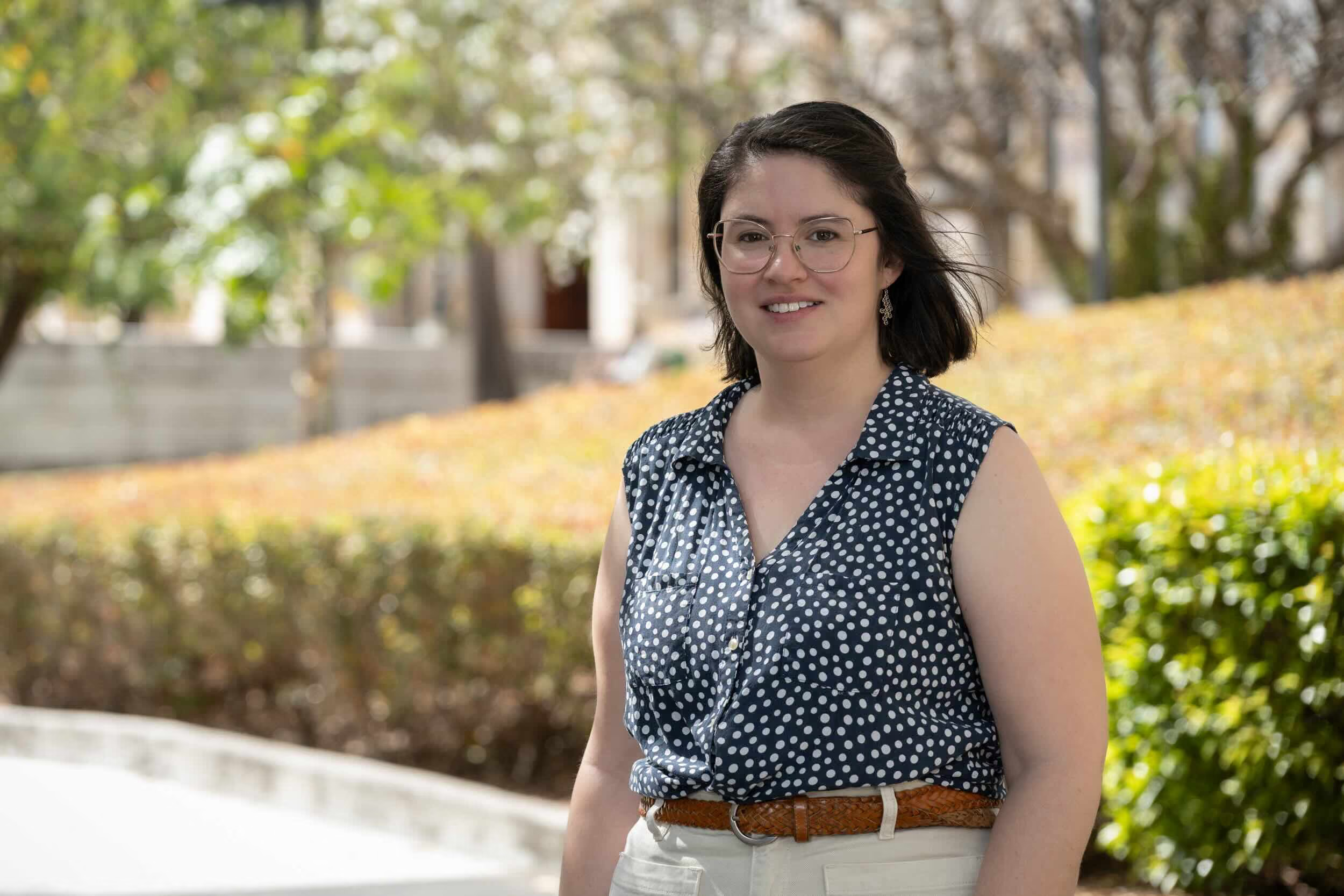
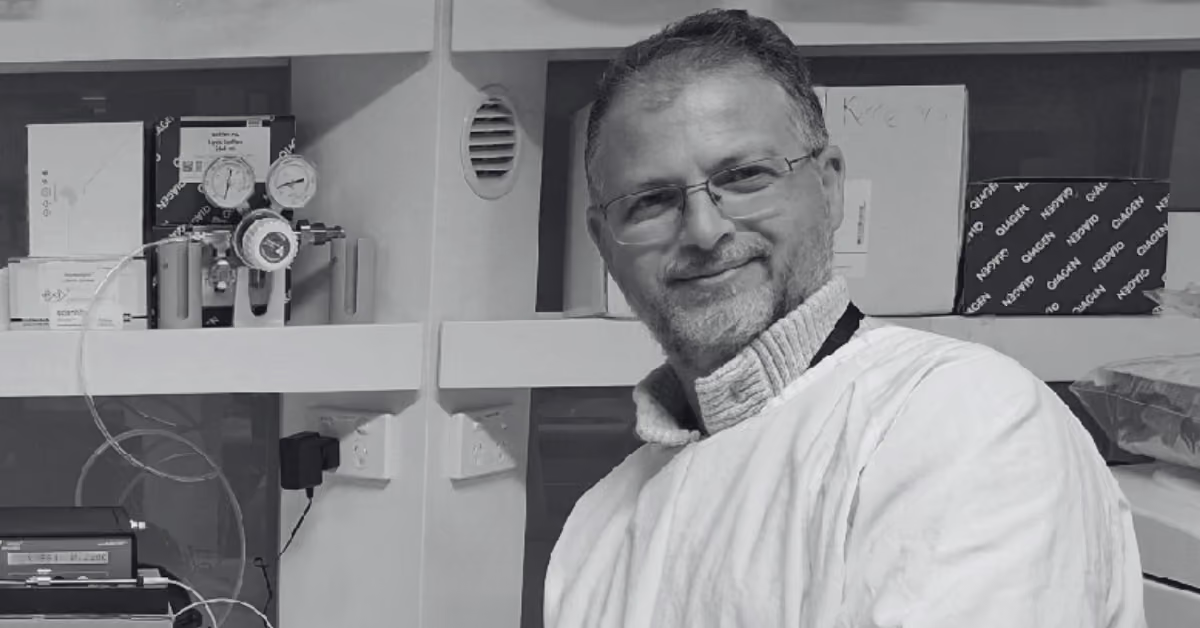
Picture: Associate Professor Orazio Vittorio

Targeting the drivers of cancer growth

July 1, 2026
Exploring how extrachromosomal DNA (ecDNA) drives cancer growth, spread and treatment resistance.
Read Transcript

The challenge

For families facing brain cancer, time and treatment options are often painfully limited. Brain tumours are among the leading causes of cancer-related death. Glioblastoma is the most aggressive form of brain cancer, with fewer than 5% of patients surviving beyond five years.

Associate Professor Orazio Vittorio and his team at UNSW are investigating extrachromosomal DNA (ecDNA), small circular fragments of DNA that sit outside a cell’s normal chromosomes and often carry cancer-driving genes. ecDNA is increasingly recognised as a mechanism that enables tumours to grow, evolve and resist therapy. 

This research combines fundamental biology with gene-editing approaches to understand how ecDNA contributes to cancer growth and treatment resistance, and whether it can be targeted as a new therapeutic strategy.

Key highlights

Researchers have made significant progress in understanding ecDNA as a driver of aggressive cancer types.

For the first time, a CRISPR-based gene-editing approach (a tool that can precisely edit genes) was shown to selectively eliminate ecDNA in cancer cells, establishing proof of concept for a new therapeutic strategy.

In preclinical studies, targeting ecDNA reduced tumour growth and triggered cancer cell death. The team also found ecDNA may help cancers evade the immune system and move between cells, providing new insights into how tumours survive, spread and resist treatment. Together, these findings provide early evidence supporting ecDNA as a potential target for future cancer therapies. 

The role of philanthropy

Funding from Hearts & Minds, as nominated by TDM Growth Partners, has helped move this research from an emerging idea to a validated proof of concept. It has enabled the team to build the specialised laboratory systems, tools and expertise required to study ecDNA and test whether it can be targeted in real cancer cells.

Importantly, it has also given researchers the freedom to explore additional biological pathways that may influence how tumours grow, spread and respond to treatment.

What this could unlock

By showing that ecDNA can be selectively eliminated in cancer cells, this work represents an important shift from understanding how cancer adapts to directly targeting one of its underlying drivers. While still at an early stage, it opens the possibility of a new class of therapies aimed at disrupting cancer’s ability to grow, evolve and resist treatment, particularly in aggressive cancers such as glioblastoma.

This project is supported by Hearts & Minds, as nominated by Core Fund Manager, TDM Growth Partners. For further information and updates, visit UNSW.

The challenge

For families facing brain cancer, time and treatment options are often painfully limited. Brain tumours are among the leading causes of cancer-related death. Glioblastoma is the most aggressive form of brain cancer, with fewer than 5% of patients surviving beyond five years.

Associate Professor Orazio Vittorio and his team at UNSW are investigating extrachromosomal DNA (ecDNA), small circular fragments of DNA that sit outside a cell’s normal chromosomes and often carry cancer-driving genes. ecDNA is increasingly recognised as a mechanism that enables tumours to grow, evolve and resist therapy. 

This research combines fundamental biology with gene-editing approaches to understand how ecDNA contributes to cancer growth and treatment resistance, and whether it can be targeted as a new therapeutic strategy.

Key highlights

Researchers have made significant progress in understanding ecDNA as a driver of aggressive cancer types.

For the first time, a CRISPR-based gene-editing approach (a tool that can precisely edit genes) was shown to selectively eliminate ecDNA in cancer cells, establishing proof of concept for a new therapeutic strategy.

In preclinical studies, targeting ecDNA reduced tumour growth and triggered cancer cell death. The team also found ecDNA may help cancers evade the immune system and move between cells, providing new insights into how tumours survive, spread and resist treatment. Together, these findings provide early evidence supporting ecDNA as a potential target for future cancer therapies. 

The role of philanthropy

Funding from Hearts & Minds, as nominated by TDM Growth Partners, has helped move this research from an emerging idea to a validated proof of concept. It has enabled the team to build the specialised laboratory systems, tools and expertise required to study ecDNA and test whether it can be targeted in real cancer cells.

Importantly, it has also given researchers the freedom to explore additional biological pathways that may influence how tumours grow, spread and respond to treatment.

What this could unlock

By showing that ecDNA can be selectively eliminated in cancer cells, this work represents an important shift from understanding how cancer adapts to directly targeting one of its underlying drivers. While still at an early stage, it opens the possibility of a new class of therapies aimed at disrupting cancer’s ability to grow, evolve and resist treatment, particularly in aggressive cancers such as glioblastoma.

This project is supported by Hearts & Minds, as nominated by Core Fund Manager, TDM Growth Partners. For further information and updates, visit UNSW.
Disclaimer: This material has been prepared by Hearts & Minds, published on July 1, 2026. HM1 is not responsible for the content of linked websites or content prepared by third party. The inclusion of these links and third-party content does not in any way imply any form of endorsement by HM1 of the products or services provided by persons or organisations who are responsible for the linked websites and third-party content. This information is for general information only and does not consider the objectives, financial situation or needs of any person. Before making an investment decision, you should read the relevant disclosure document (if appropriate) and seek professional advice to determine whether the investment and information is suitable for you.

facebook
linkedin
All
Thank you! Your submission has been received!
Oops! Something went wrong while submitting the form.
July 1, 2026

Understanding fatigue in young people with Charcot-Marie-Tooth disease

Developing a tool to improve understanding, research and care.

Read More
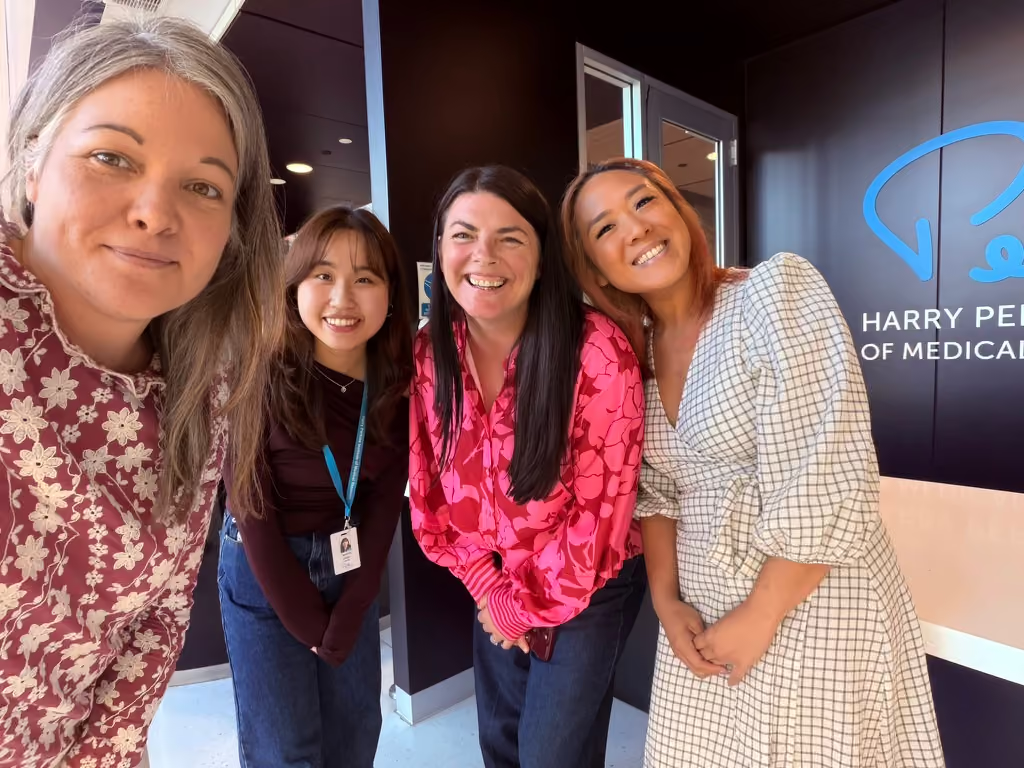
Pictured left to right: Professor Gina Ravenscroft (Perkins), Jasmine Chew, Sam Payne (CEO and Founder, Pink Elephants Support Network), and Shelby Mullin (Perkins).Pictured left to right: Professor Gina Ravenscroft (Perkins), Jasmine Chew, Sam Payne (CEO and Founder, Pink Elephants Support Network), and Shelby Mullin (Perkins).Pictured left to right: Professor Gina Ravenscroft (Perkins), Jasmine Chew, Sam Payne (CEO and Founder, Pink Elephants Support Network), and Shelby Mullin (Perkins).Pictured left to right: Professor Gina Ravenscroft (Perkins), Jasmine Chew, Sam Payne (CEO and Founder, Pink Elephants Support Network), and Shelby Mullin (Perkins).
July 1, 2026

Giving families living with rare diseases the answers they need

Supporting research to improve the diagnosis of rare genetic neuromuscular diseases and build the foundations for future treatments.

Read More
Picture: Dr Laura Grice, Lead Researcher Picture: Dr Laura Grice, Lead Researcher Picture: Dr Laura Grice, Lead Researcher Picture: Dr Laura Grice, Lead Researcher
July 1, 2026

Understanding spinal cord injury recovery

The world's first molecular map of spinal cord injury across time and injury levels

Read More
Picture: Professor Lindy Jeffree, Neurosurgeon and Chair, Brain Cancer Australia National Consortium Picture: Professor Lindy Jeffree, Neurosurgeon and Chair, Brain Cancer Australia National Consortium Picture: Professor Lindy Jeffree, Neurosurgeon and Chair, Brain Cancer Australia National Consortium Picture: Professor Lindy Jeffree, Neurosurgeon and Chair, Brain Cancer Australia National Consortium
July 1, 2026

Building the foundations for faster progress against brain cancer

Uniting researchers, clinicians and patients to accelerate research and improve patient care.

Read More
July 1, 2026

Accelerating CAR-T cell therapies for patients in need 

Bringing innovative cancer therapies closer to patients.

Read More
July 1, 2026

Supporting babies at high risk of cerebral palsy from the very beginning

Testing a family-centred early intervention program to improve outcomes for infants and support parents during the first critical months of life.

Read More
July 1, 2026

Making early cerebral palsy screening more accessible

Exploring new ways to identify babies at risk of cerebral palsy sooner and support better outcomes.

Read More
Picture: Professor Tracy Putoczki, Laboratory Head at WEHIPicture: Professor Tracy Putoczki, Laboratory Head at WEHIPicture: Professor Tracy Putoczki, Laboratory Head at WEHIPicture: Professor Tracy Putoczki, Laboratory Head at WEHI
July 1, 2026

Mapping the surface of pancreatic cancer cells

Identifying proteins on pancreatic cancer cells that could become new targets for developing future treatments.

Read More
Picture: Professor Jane Visvader and Professor Geoff Lindeman from the Breast Cancer Laboratory at WEHI Picture: Professor Jane Visvader and Professor Geoff Lindeman from the Breast Cancer Laboratory at WEHI Picture: Professor Jane Visvader and Professor Geoff Lindeman from the Breast Cancer Laboratory at WEHI Picture: Professor Jane Visvader and Professor Geoff Lindeman from the Breast Cancer Laboratory at WEHI
July 1, 2026

Understanding how breast cancer begins

Tracking the earliest changes in BRCA mutation carriers to help prevent cancer before it starts.

Read More
December 5, 2023

Prof Daniel MacArthur | 2023 Sohn Hearts & Minds Conference

At the 2023 Sohn Hearts & Minds Conference, we heard from Prof Daniel MacArthur, the Director of the Centre for Population Genomics.

Read More
December 5, 2023

Prof Michelle Simmons AO | Sohn Hearts & Minds Conference

At this year's Sohn Hearts & Minds Conference, we heard from Prof Michelle Simmons, the CEO and Founder of Silicon Quantum Computing.

Read More
December 5, 2023

Prof Misty Jenkins AO | 2023 Sohn Hearts & Minds Conference

At the 2023 Sohn Hearts & Minds Conference, we heard from Prof Misty Jenkins. Misty is a NHMRC fellow and laboratory head of the Immunology Division at the Walter and Eliza Hall Institute.

Read More
Daniel MacArthur speaking at the 2023 Sohn Hearts & Minds Conference in Sydney.Daniel MacArthur speaking at the 2023 Sohn Hearts & Minds Conference in Sydney.Daniel MacArthur speaking at the 2023 Sohn Hearts & Minds Conference in Sydney.Daniel MacArthur speaking at the 2023 Sohn Hearts & Minds Conference in Sydney.
November 15, 2023

Advancing Medicine Is In Daniel MacArthur’s DNA

When genomic scientist Daniel MacArthur had the opportunity to set up a new Centre for Population Genomics in Australia in 2019, he jumped at the chance to return home after 12 years living overseas.

Read More
November 10, 2023

Big thinkers in hunt for brain cancer cure

“Brain cancer is rare, but for people who do get it the prognosis is not good,” Assistant Professor Jenkins tells The Australian.

Read More
April 20, 2023

Artificial intelligence gives new hope for sufferers of severe heart problem

New AI software can improve the diagnosis of severe aortic stenosis by 72% and could potentially change the lives of about 50,000 Australians with the life-threatening condition.

Read More