Silent wave' of brain damage could follow pandemic

Australia urgently needs to prepare for a "silent wave" of COVID-19, which appears to be taking the form of long-term neurological side effects following infection with the virus.

Jill Margo

Silent wave' of brain damage could follow pandemic

September 23, 2020
Australia urgently needs to prepare for a "silent wave" of COVID-19, which appears to be taking the form of long-term neurological side effects following infection with the virus.
Read Transcript

Australia urgently needs to prepare for a "silent wave" of COVID-19, which appears to be taking the form of long-term neurological side effects following infection with the virus.

The esteemed Florey Institute of Neuroscience and Mental Health in Melbourne is particularly concerned about a potential surge in Parkinson’s disease.


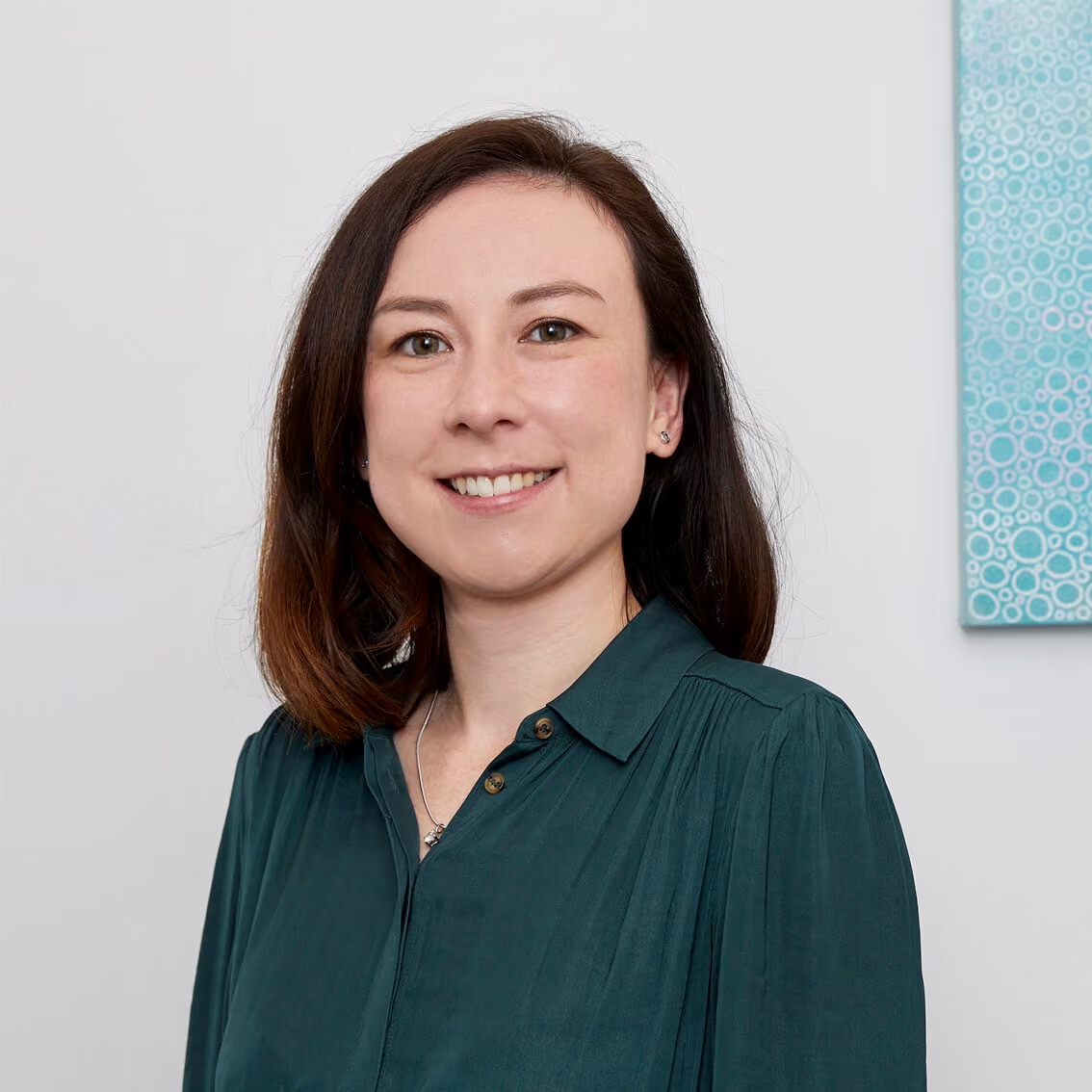
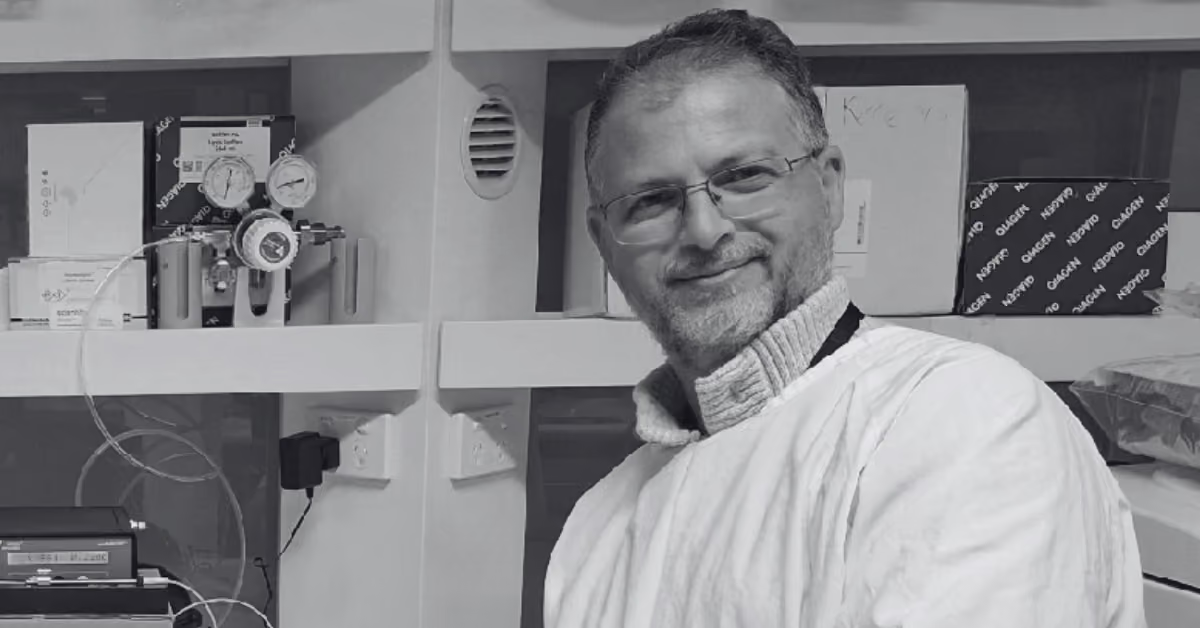
“We believe loss of smell presents a new way forward in detecting someone’s risk of developing Parkinson’s disease early, says Leah Beauchamp.  


It is spearheading a call for crucial action on three fronts: to ensure more accurate diagnostic tools are available to identify neurodegeneration early; to get advance neuroprotective treatments under way; and to establish long-term monitoring of people who have been infected with the virus.

“Although scientists are still learning how the SARS-CoV-2 virus is able to invade the brain and central nervous system, the fact that it’s getting in there is clear," said Professor Kevin Barnham, head of the neurotherapeutics laboratory at the Florey.

“Our best understanding is that the virus can cause insult to brain cells, with potential for neurodegeneration to follow on from there.”

Viruses are a key risk factor for Parkinson’s. While the link between COVID-19 and Parkinson’s is a central focus for the Florey team, monitoring would capture other neurological issues too.

Alarm about neurological effects was raised early in the pandemic. In March, a neuro-COVID-19 ward in Italy was established for patients who had suffered acute events such as stroke, delirium, epileptic seizures and what looked like encephalitis.

By July, experts were warning of a potential wave of brain damage, leading to severe neurological complications, including inflammation, psychosis and delirium.

At the time, a University College London study described 43 COVID-19 cases suffering temporary brain dysfunction, strokes, nerve damage or other serious brain effects.

Smell loss a clue

The Florey is an international leader in brain research and in a review, published on Wednesday in the Journal of Parkinson’s Disease, it presents a proposal for long-term screening of COVID-19 cases post-recovery for expressions of neurodegenerative disease, particularly for early diagnosis of Parkinson’s.

Viruses are a key risk factor for Parkinson’s, says Professor Kevin Barnham. 

Symptoms would range from a severe lack of oxygen to the brain, to loss of smell. The review showed smell loss affected three out of four infected people.

While this loss may seem a little trivial, “it tells us a lot about what’s happening on the inside and that is that there’s acute inflammation in the olfactory system responsible for smell”, said researcher and PhD candidate Leah Beauchamp.

“We believe loss of smell presents a new way forward in detecting someone’s risk of developing Parkinson’s disease early.”

Almost 90 per cent of people in the early stages of Parkinson’s report some loss of smell, a decade ahead of movement problems.

Diagnosis relies on movement issues, by which time the brain has already been affected in up to 70 per cent of patients. This means the window to use protective therapies may have been missed.

About 80,000 Australians have Parkinson’s and considering the potential impact of COVID-19, therapies are needed, the team said. The Florey has two under investigation.

Following the 1918 Spanish flu pandemic, the risk of developing Parkinson’s disease increased between twofold to threefold. Both virulent flu and coronaviruses can cause inflammation in the brain.

Now the team is “very worried” about the potential increase of a raft of neurological diseases that could unfold.

It says a $10 million government investment is required to roll out the national diagnosis screening platform and significant further investment to advance the therapies to clinical use.


This article was originally posted on The Australian Financial Review here.

Licensed by Copyright Agency. You must not copy this work without permission.
Australia urgently needs to prepare for a "silent wave" of COVID-19, which appears to be taking the form of long-term neurological side effects following infection with the virus.

The esteemed Florey Institute of Neuroscience and Mental Health in Melbourne is particularly concerned about a potential surge in Parkinson’s disease.


“We believe loss of smell presents a new way forward in detecting someone’s risk of developing Parkinson’s disease early, says Leah Beauchamp.  


It is spearheading a call for crucial action on three fronts: to ensure more accurate diagnostic tools are available to identify neurodegeneration early; to get advance neuroprotective treatments under way; and to establish long-term monitoring of people who have been infected with the virus.

“Although scientists are still learning how the SARS-CoV-2 virus is able to invade the brain and central nervous system, the fact that it’s getting in there is clear," said Professor Kevin Barnham, head of the neurotherapeutics laboratory at the Florey.

“Our best understanding is that the virus can cause insult to brain cells, with potential for neurodegeneration to follow on from there.”

Viruses are a key risk factor for Parkinson’s. While the link between COVID-19 and Parkinson’s is a central focus for the Florey team, monitoring would capture other neurological issues too.

Alarm about neurological effects was raised early in the pandemic. In March, a neuro-COVID-19 ward in Italy was established for patients who had suffered acute events such as stroke, delirium, epileptic seizures and what looked like encephalitis.

By July, experts were warning of a potential wave of brain damage, leading to severe neurological complications, including inflammation, psychosis and delirium.

At the time, a University College London study described 43 COVID-19 cases suffering temporary brain dysfunction, strokes, nerve damage or other serious brain effects.

Smell loss a clue

The Florey is an international leader in brain research and in a review, published on Wednesday in the Journal of Parkinson’s Disease, it presents a proposal for long-term screening of COVID-19 cases post-recovery for expressions of neurodegenerative disease, particularly for early diagnosis of Parkinson’s.

Viruses are a key risk factor for Parkinson’s, says Professor Kevin Barnham. 

Symptoms would range from a severe lack of oxygen to the brain, to loss of smell. The review showed smell loss affected three out of four infected people.

While this loss may seem a little trivial, “it tells us a lot about what’s happening on the inside and that is that there’s acute inflammation in the olfactory system responsible for smell”, said researcher and PhD candidate Leah Beauchamp.

“We believe loss of smell presents a new way forward in detecting someone’s risk of developing Parkinson’s disease early.”

Almost 90 per cent of people in the early stages of Parkinson’s report some loss of smell, a decade ahead of movement problems.

Diagnosis relies on movement issues, by which time the brain has already been affected in up to 70 per cent of patients. This means the window to use protective therapies may have been missed.

About 80,000 Australians have Parkinson’s and considering the potential impact of COVID-19, therapies are needed, the team said. The Florey has two under investigation.

Following the 1918 Spanish flu pandemic, the risk of developing Parkinson’s disease increased between twofold to threefold. Both virulent flu and coronaviruses can cause inflammation in the brain.

Now the team is “very worried” about the potential increase of a raft of neurological diseases that could unfold.

It says a $10 million government investment is required to roll out the national diagnosis screening platform and significant further investment to advance the therapies to clinical use.


This article was originally posted on The Australian Financial Review here.

Licensed by Copyright Agency. You must not copy this work without permission.

Disclaimer: This material has been prepared by Australian Financial Review, published on September 23, 2020. HM1 is not responsible for the content of linked websites or content prepared by third party. The inclusion of these links and third-party content does not in any way imply any form of endorsement by HM1 of the products or services provided by persons or organisations who are responsible for the linked websites and third-party content. This information is for general information only and does not consider the objectives, financial situation or needs of any person. Before making an investment decision, you should read the relevant disclosure document (if appropriate) and seek professional advice to determine whether the investment and information is suitable for you.

facebook
linkedin
All
Thank you! Your submission has been received!
Oops! Something went wrong while submitting the form.
Picture: A/Prof Melissa Call & Prof Matt CallPicture: A/Prof Melissa Call & Prof Matt CallPicture: A/Prof Melissa Call & Prof Matt CallPicture: A/Prof Melissa Call & Prof Matt Call
July 1, 2026

Next generation CAR T-cell therapy for cancer

The Call Lab at WEHI is pioneering innovative approaches to find this ‘goldilocks zone’, making CAR T-cell therapy safer and more effective.

Read More
Picture: Associate Professor Neale CohenPicture: Associate Professor Neale CohenPicture: Associate Professor Neale CohenPicture: Associate Professor Neale Cohen
July 1, 2026

Revolutionising Diabetes Care

Improving diabetes care has the potential to transform individual health outcomes while strengthening the wellbeing of entire communities.

Read More
HM1 Chief Operating Officer Maggie O’Neill with A/Prof Elizabeth Ng at the Murdoch Children's Research Institute in Melbourne (March 2026).HM1 Chief Operating Officer Maggie O’Neill with A/Prof Elizabeth Ng at the Murdoch Children's Research Institute in Melbourne (March 2026).HM1 Chief Operating Officer Maggie O’Neill with A/Prof Elizabeth Ng at the Murdoch Children's Research Institute in Melbourne (March 2026).HM1 Chief Operating Officer Maggie O’Neill with A/Prof Elizabeth Ng at the Murdoch Children's Research Institute in Melbourne (March 2026).
May 4, 2026

How science turned back the clock of human development to create a miracle blood stem cell

Many thought it could never be done. But three Murdoch Children’s Research Institute scientists recreated embryonic development to crack the blood stem cell code.

Read More
November 15, 2024

Professor Alex Brown in conversation with Professor Jason Kovacic

At the 2024 Sohn Hearts & Minds Conference, we heard from Professor Alex Brown in conversation with Professor Jason Kovacic about Indigenous heart health and genomics.

Read More

A/Professor Tim Sargeant | 2024 Sohn Hearts & Minds Conference

Associate Professor Tim Sargeant has been at SAHMRI (South Australian Health and Medical Research Institute) in Adelaide where he studies the role of lysosomes in Alzheimer’s disease.

Read More
July 1, 2026

Unlocking the mysteries of the human brain

The Sydney Brain Bank is helping researchers uncover the causes of neurodegenerative disease and build a future with better diagnosis, treatment and prevention.

Read More
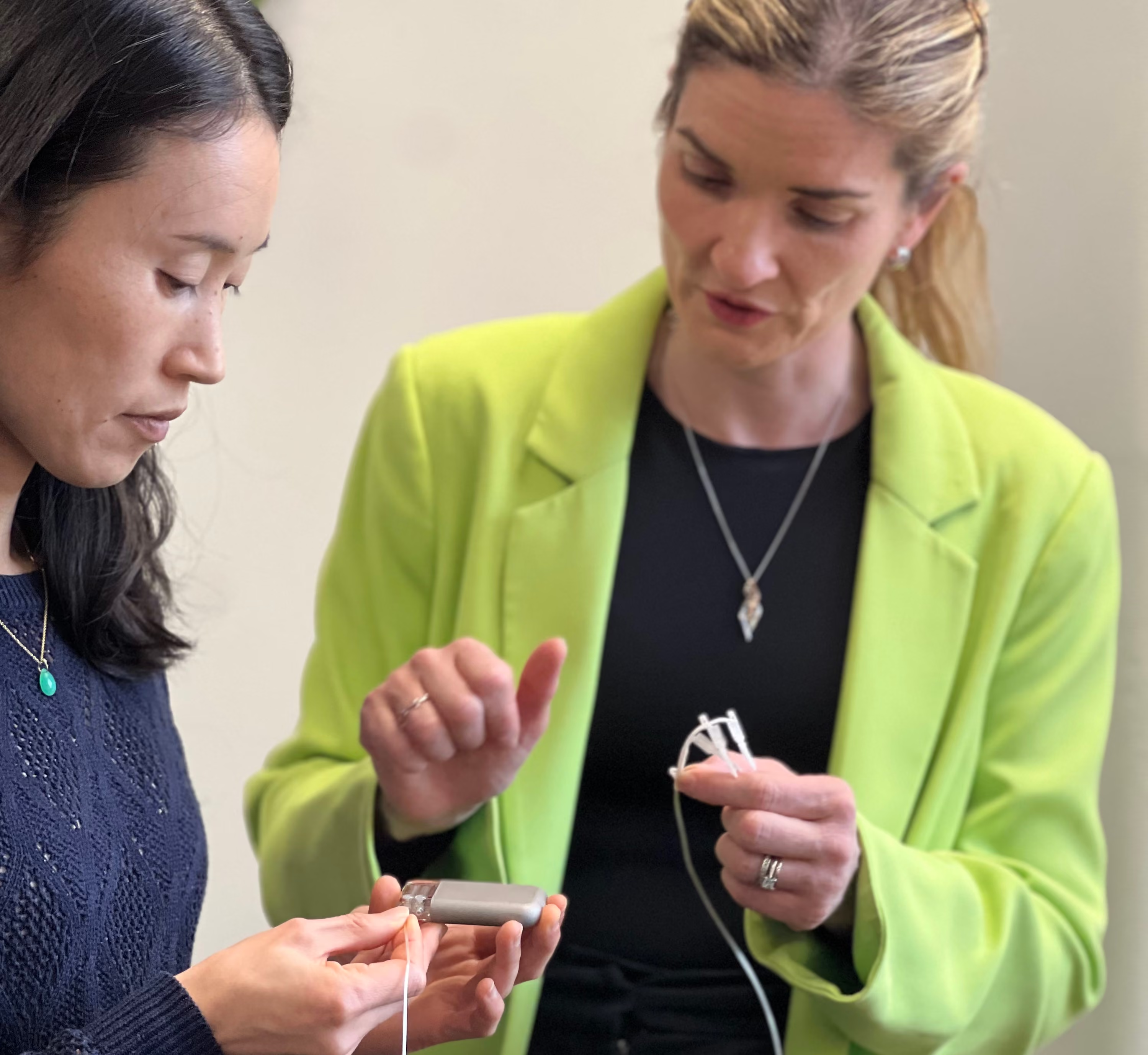
Bionics Institute researchers A/Prof Sophie Payne and Dr Tomoko Hyakumura.Bionics Institute researchers A/Prof Sophie Payne and Dr Tomoko Hyakumura.Bionics Institute researchers A/Prof Sophie Payne and Dr Tomoko Hyakumura.Bionics Institute researchers A/Prof Sophie Payne and Dr Tomoko Hyakumura.
July 1, 2026

A new approach to Parkinson’s Disease

Exploring nerve stimulation as a potential treatment.

Read More
Dr Eleanor Drummond presenting at the 2025 Sohn Hearts & Minds ConferenceDr Eleanor Drummond presenting at the 2025 Sohn Hearts & Minds ConferenceDr Eleanor Drummond presenting at the 2025 Sohn Hearts & Minds ConferenceDr Eleanor Drummond presenting at the 2025 Sohn Hearts & Minds Conference
July 1, 2026

Revealing what drives PSP

Mapping the biological changes behind progressive supranuclear palsy in the brain.

Read More
Picture: Dr Jennifer SnaithPicture: Dr Jennifer SnaithPicture: Dr Jennifer SnaithPicture: Dr Jennifer Snaith
July 1, 2026

Advancing treatment options for type 1 diabetes

Improving blood glucose and reducing insulin needs.

Read More
Picture: Dr Hamish KingPicture: Dr Hamish KingPicture: Dr Hamish KingPicture: Dr Hamish King
July 1, 2026

Solving the genetic causes of autoimmune diseases

Mapping hundreds of risk markers to better understand how these diseases develop and progress

Read More
July 1, 2026

The Future of Pain Management

Enhancing healthcare professionals' ability to deliver better pain management, now and into the future.

Read More
July 1, 2026

Harnessing the power of stem cell technology

Developing cell therapies for patients with blood diseases

Read More
Picture: Professor Kazuaki NegishiPicture: Professor Kazuaki NegishiPicture: Professor Kazuaki NegishiPicture: Professor Kazuaki Negishi
July 1, 2026

Protecting the heart when every minute matters

Investigating a new treatment to reduce heart damage after heart attacks

Read More
Picture: Associate Professor Orazio VittorioPicture: Associate Professor Orazio VittorioPicture: Associate Professor Orazio VittorioPicture: Associate Professor Orazio Vittorio
July 1, 2026

Targeting the drivers of cancer growth

Exploring how extrachromosomal DNA (ecDNA) drives cancer growth, spread and treatment resistance.

Read More
July 1, 2026

Improving the diagnosis of muscle disorders using advanced genetic testing

Focused on improving the efficiency and accuracy of diagnosing muscle disorders.

Read More