Secret to a long life cheaper than you think celebrity physician Peter Attia reveals

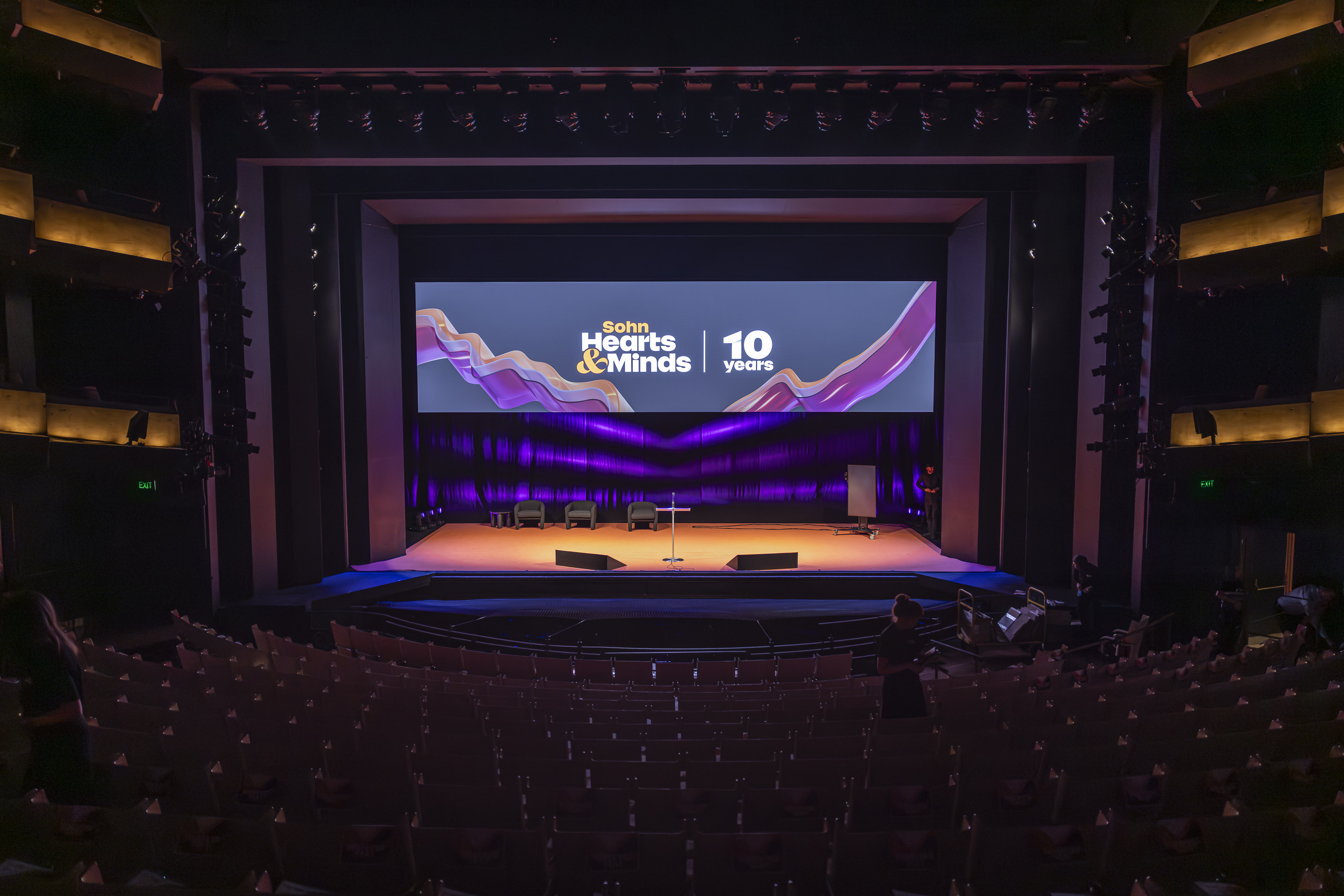
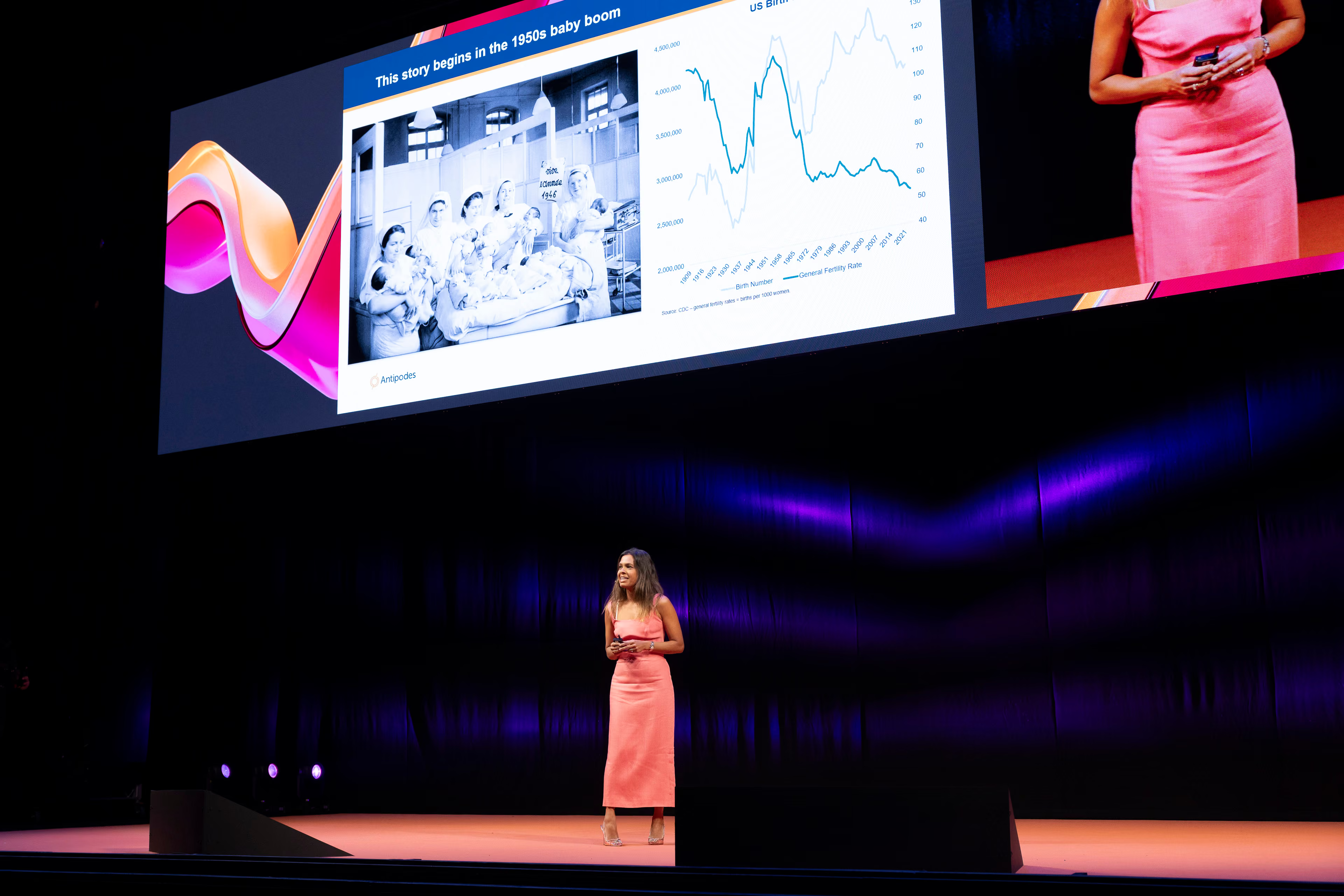
Don't miss Dr Peter Attia who will speak at the Sohn Hearts & Minds Conference at the Sydney Opera House next month.

Jared Lynch

Secret to a long life cheaper than you think celebrity physician Peter Attia reveals

October 6, 2023
Don't miss Dr Peter Attia who will speak at the Sohn Hearts & Minds Conference at the Sydney Opera House next month.
Read Transcript

It was a TV show meant to promote longevity. But soon after Chris Hemsworth appeared with celebrity physician Peter Attia on Disney+ documentary series Limitless, it seemed to have cut short the actor’s career.

Headlines around the world screamed that the movie star, who has built his career on playing the Marvel superhero Thor, was taking a break from acting after it was revealed during the series that he had a genetic predisposition to Alzheimer’s disease.

Turns out the revelation that he carried two copies of the APOE4 gene - which has been linked to an increased risk of developing degenerative brain disorder - and his impending absence from movie screens, was a coincidence or conflated at the very least.

“I don’t think I’m sharing anything that Chris wouldn’t be comfortable sharing,” Dr Attia, 50, tells The Weekend Australian.

“I know Chris wasn’t taking time off because of that knowledge (that he carried the APOE4 gene). Chris was taking time off because Chris was exhausted. Chris has worked insanely hard for a decade - never not working on a project.‍

“And I think that was taking a toll on him. Regardless of what his genetic predisposition was to Alzheimer’s disease, Limitless provided a great opportunity for Chris to say ‘OK, I really do need to take a little bit of a break’ - even the production of Limitless was far more taxing than it was ever billed to any of us. In Chris’s case, he was able to take some time to recharge with his family.”

And this encapsulates Dr Attia’s main piece of advice when people ask him what is the secret to living longer.

The fountain of youth and keys to a long life has been pursued for a millennia. It’s as old as man. It’s the question centenarians get asked when they are propped up in their easy chair on their big day and get peppered with questions about how they have reached such a grand age, with their answers as varied as their years.

“I think you see why every interview with a centenarian trying to elucidate the cause of or drivers of their lifespan produces some of the most comical responses,” Dr Attia says.‍

“It could be more cigars, more cigarettes, more whiskey, more family, more commitment - it‘s a random generator of responses.”

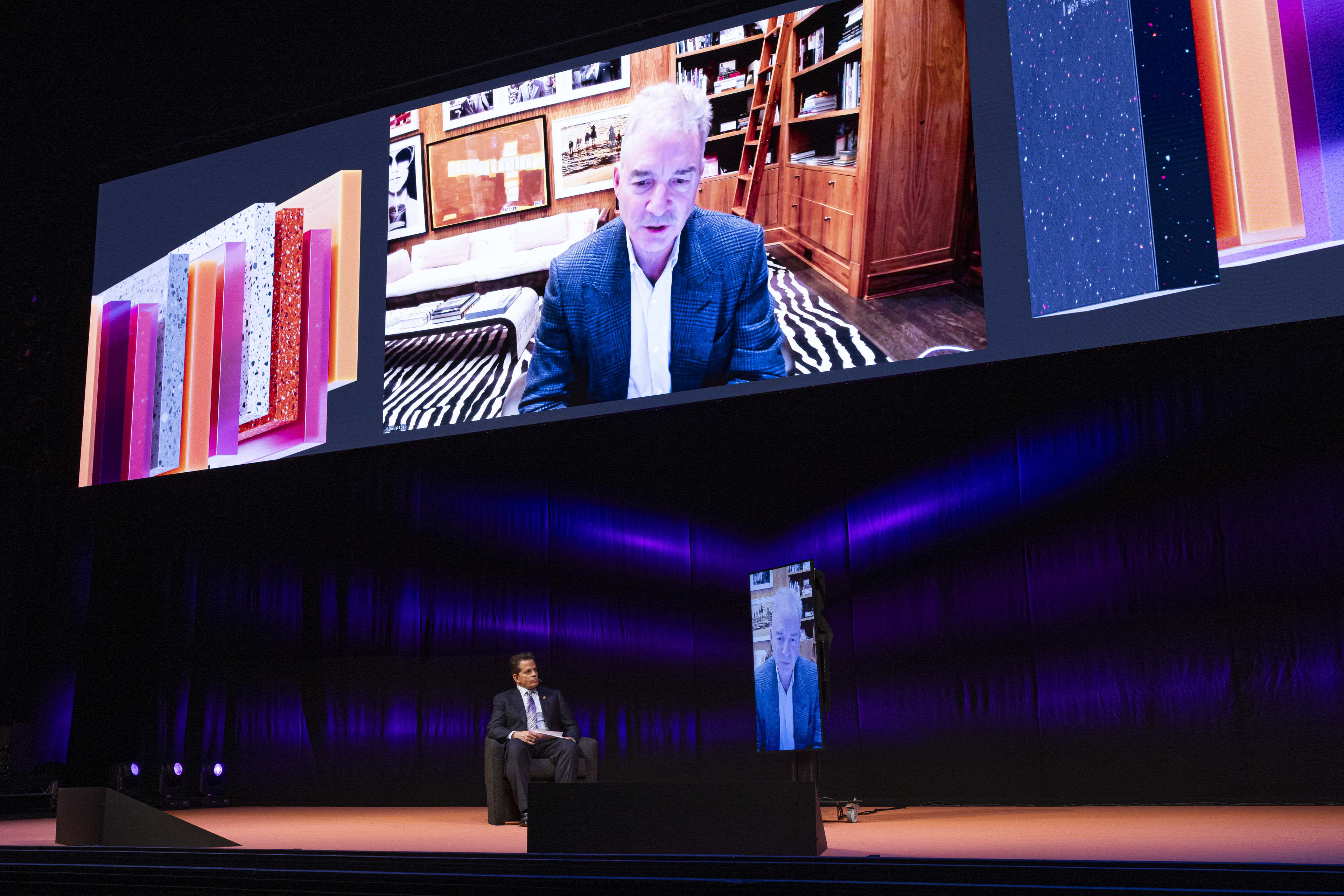
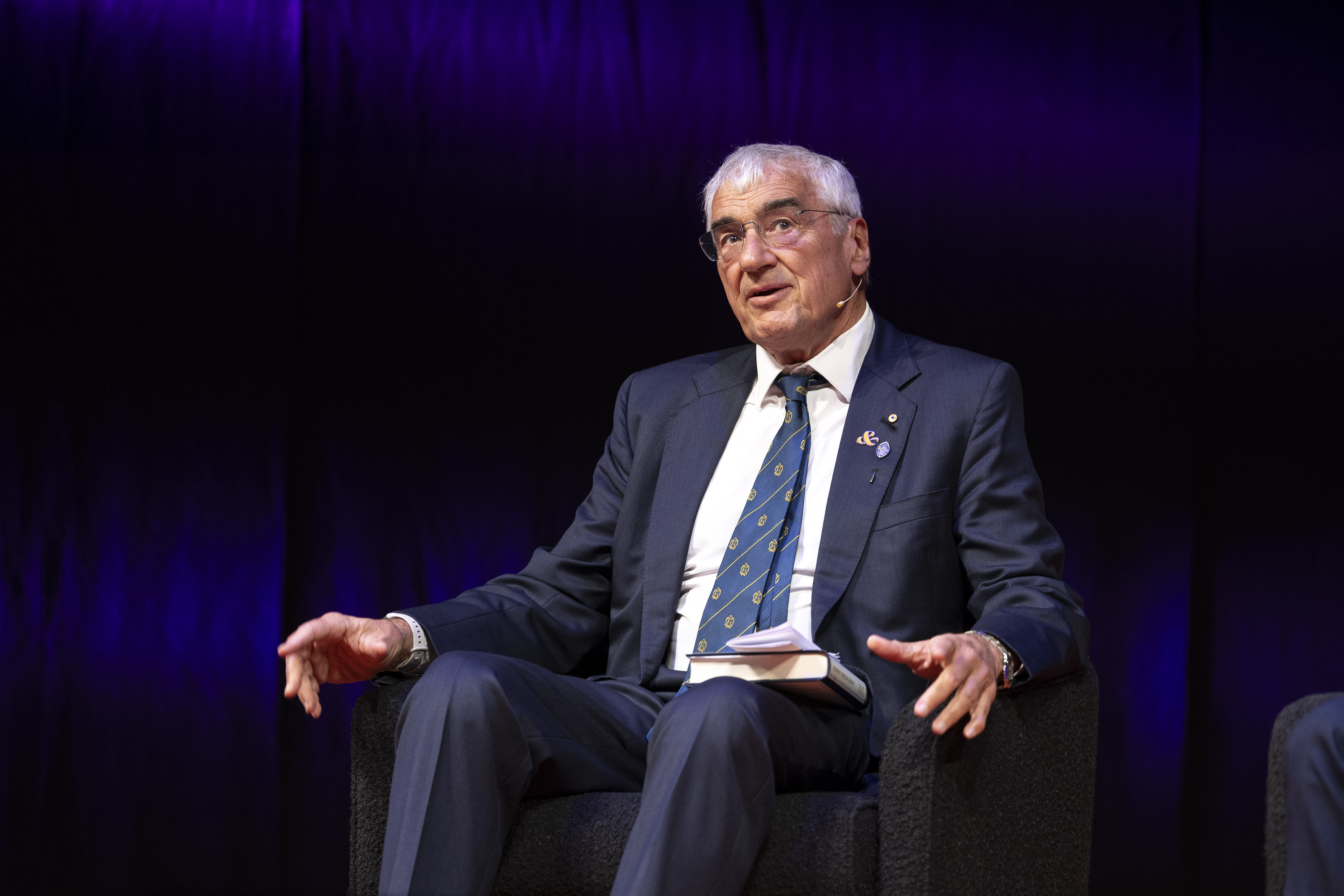
The Sohn Hearts & Minds conference will be held at the Sydney Opera House on November 17.

But according to Dr Attia - who will speak at the Sohn Hearts & Minds in Sydney next month - nothing is completely random. He has built a career unearthing about what fuels a long life and shared his knowledge in the bestselling book Outlive: The Science & Art of Longevity.

And what creates a long life is less complex and less expensive than it appears. In fact, if you followed it literally, it would send you off to sleep.

Embracing boredom, is Dr Attia’s main piece of advice. It appears to fly in the face of Bob Dylan’s wisdom of a man who is “not busy being born is busy dying”. But being bored, surprisingly, has significant health benefits.


“I will say that it is probably the single hardest thing for high achieving people to do. And it‘s a discomfort that is almost unimaginable,” Dr Attia says.

“I think boredom is a very important thing. I think it‘s very healthy for us to be bored and Mother Nature/natural selection has hard wired us to not want to spend much time in that situation.

“And ironically, it might be more important today than it was 100,000 years ago. You could argue maybe 100,000 years ago, it wasn’t that important and that’s why natural selection made it so uncomfortable. But today, the world we live in could not have been anticipated by Darwin, and by Darwin I don’t mean the actual person of course, I mean, the forces of natural selection. And that’s I think exactly why in this hyperstimulating world, we all need a way to be bored.”

Dr Attia is highlighting the need to be able to switch off and rest - a tough task in the modern ‘always on’ era, where extreme business has become the norm. People can communicate like never before - receiving on average more than hundreds of notifications a day via text messages, social media alerts, emails advertising and more. It’s creating digital overload that is a main cause of flatlining productivity as more employees become burnt out.

“We need a way to be in nature,” Dr Attia says while speaking to The Weekend Australian on a video call.

“I mean, think about it, the fact that I‘m looking at you on a screen from inside an air conditioned room with perfect right angles everywhere, this can’t be really healthy for my nervous system.

“It‘s healthy for me in many ways, and I wouldn’t trade this for anything - I don’t want to be living outdoors, fending off lions and tigers. But I gave something up when I adopted this lifestyle and I think it’s important that we all spend time outdoors every single day, we all spend time in the asymmetry of nature. We all spend time looking at sunlight, we all spend time being uncomfortable in extreme temperatures.”

Peter Attia says we all need to find more time to spend outdoors.

While the Sohn Hearts & Minds conference will include rapid-fire stock picks from leading investment experts all over the globe, all of the events’ profits go to medical research with organisers targeting to raise $60m by next month.

Dr Attia labels his longevity research as medicine 3.0. He says there needs to be a shift from treating disease to preventing it in the first place, with longevity not just about reaching a ripe old age - but also living with a higher quality and more active life for longer.

“What I call medicine. 3.0 is really geared towards that degree of prevention. It‘s how do you live longer without atherosclerosis? How do you slow the progression of those things? And that’s probably where, you know, we won’t necessarily all get to be centenarians, I have no expectation that I will be given my genes, but I definitely think it adds years to life. And I think more importantly, it adds quality to life.

“To focus more on, ‘hey, when I‘m 80, how can I physically and cognitively function, the way I see a healthy 65 year old today?’ Boy, that has more bearing on the quality of your life than anything else because, you know, lifespan without healthspan is a curse.

“In fact most people are quite afraid of that. Nobody wants to live a long life and be suffering.

“So I think that what we really ought to be doing is focusing on healthspan focusing on what does the final decade of my life look like physically, cognitively, emotionally. Those are the three things that are going to define the quality of your life. And if I make sure that my actions today are setting me up, to have the best version of that final decade, what I call the marginal decade, then not only will that be exceptional, but everything leading up to it will be as well.”

And despite healthcare costs rising and the global dietary supplements market generating billions of dollars a year, Dr Attia says money can’t buy good health.

“The most expensive aspect is time. I mean, for most people to make the changes that would have the biggest impact on the length and quality of their life. Exercising every single day, eating reasonably well - yeah, that‘s going to cost a little bit more money. But it’s going to cost more time.

“It‘s good news in the sense that it’s the great equaliser. It’s bad news in that you can’t really cheat and cram for the test. You know, you can’t just say, ‘well, look, I’m willing to pay a premium for this, so therefore, I’m going to have a better experience’. I mean, it doesn’t really work that way.

“There are very, very wealthy people who have incredibly poor health. That there and then tells you, you can‘t really buy health. You can’t. On average, certainly poor socioeconomic status is associated with worse health. But at the individual level, that’s completely untrue - that’s evidenced by the fact that some of the richest people in the world are some of the least healthy.”

This article was originally posted by The Australian here.

Licensed by Copyright Agency. You must not copy this work without permission.

Disclaimer: This material has been prepared by Australian, published on 6 October 2023. HM1 is not responsible for the content of linked websites or content prepared by third party. The inclusion of these links and third-party content does not in any way imply any form of endorsement by HM1 of the products or services provided by persons or organisations who are responsible for the linked websites and third-party content. This information is for general information only and does not consider the objectives, financial situation or needs of any person. Before making an investment decision, you should read the relevant disclosure document (if appropriate) and seek professional advice to determine whether the investment and information is suitable for you.
It was a TV show meant to promote longevity. But soon after Chris Hemsworth appeared with celebrity physician Peter Attia on Disney+ documentary series Limitless, it seemed to have cut short the actor’s career.

Headlines around the world screamed that the movie star, who has built his career on playing the Marvel superhero Thor, was taking a break from acting after it was revealed during the series that he had a genetic predisposition to Alzheimer’s disease.

Turns out the revelation that he carried two copies of the APOE4 gene - which has been linked to an increased risk of developing degenerative brain disorder - and his impending absence from movie screens, was a coincidence or conflated at the very least.

“I don’t think I’m sharing anything that Chris wouldn’t be comfortable sharing,” Dr Attia, 50, tells The Weekend Australian.

“I know Chris wasn’t taking time off because of that knowledge (that he carried the APOE4 gene). Chris was taking time off because Chris was exhausted. Chris has worked insanely hard for a decade - never not working on a project.‍

“And I think that was taking a toll on him. Regardless of what his genetic predisposition was to Alzheimer’s disease, Limitless provided a great opportunity for Chris to say ‘OK, I really do need to take a little bit of a break’ - even the production of Limitless was far more taxing than it was ever billed to any of us. In Chris’s case, he was able to take some time to recharge with his family.”

And this encapsulates Dr Attia’s main piece of advice when people ask him what is the secret to living longer.

The fountain of youth and keys to a long life has been pursued for a millennia. It’s as old as man. It’s the question centenarians get asked when they are propped up in their easy chair on their big day and get peppered with questions about how they have reached such a grand age, with their answers as varied as their years.

“I think you see why every interview with a centenarian trying to elucidate the cause of or drivers of their lifespan produces some of the most comical responses,” Dr Attia says.‍

“It could be more cigars, more cigarettes, more whiskey, more family, more commitment - it‘s a random generator of responses.”

The Sohn Hearts & Minds conference will be held at the Sydney Opera House on November 17.

But according to Dr Attia - who will speak at the Sohn Hearts & Minds in Sydney next month - nothing is completely random. He has built a career unearthing about what fuels a long life and shared his knowledge in the bestselling book Outlive: The Science & Art of Longevity.

And what creates a long life is less complex and less expensive than it appears. In fact, if you followed it literally, it would send you off to sleep.

Embracing boredom, is Dr Attia’s main piece of advice. It appears to fly in the face of Bob Dylan’s wisdom of a man who is “not busy being born is busy dying”. But being bored, surprisingly, has significant health benefits.


“I will say that it is probably the single hardest thing for high achieving people to do. And it‘s a discomfort that is almost unimaginable,” Dr Attia says.

“I think boredom is a very important thing. I think it‘s very healthy for us to be bored and Mother Nature/natural selection has hard wired us to not want to spend much time in that situation.

“And ironically, it might be more important today than it was 100,000 years ago. You could argue maybe 100,000 years ago, it wasn’t that important and that’s why natural selection made it so uncomfortable. But today, the world we live in could not have been anticipated by Darwin, and by Darwin I don’t mean the actual person of course, I mean, the forces of natural selection. And that’s I think exactly why in this hyperstimulating world, we all need a way to be bored.”

Dr Attia is highlighting the need to be able to switch off and rest - a tough task in the modern ‘always on’ era, where extreme business has become the norm. People can communicate like never before - receiving on average more than hundreds of notifications a day via text messages, social media alerts, emails advertising and more. It’s creating digital overload that is a main cause of flatlining productivity as more employees become burnt out.

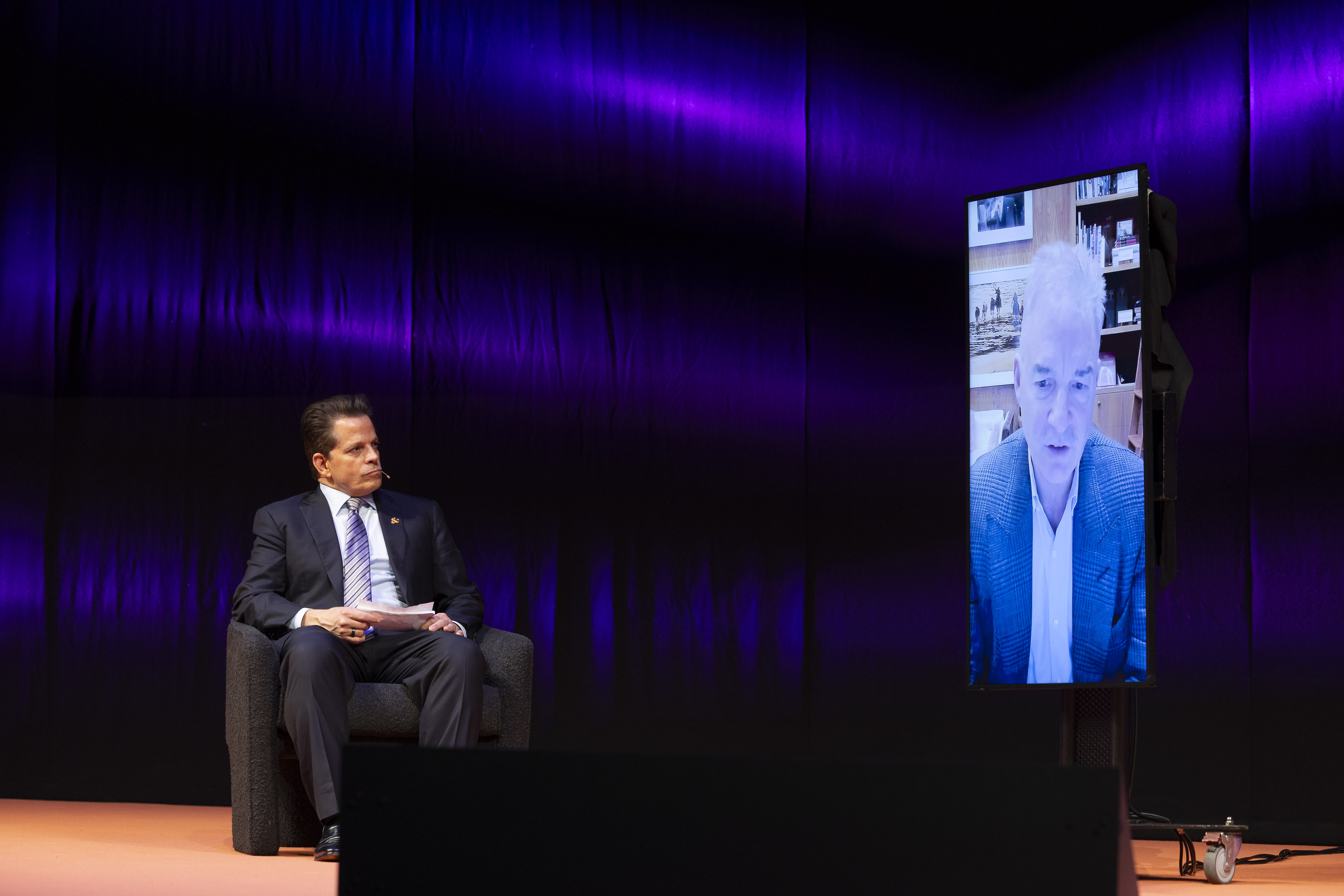
“We need a way to be in nature,” Dr Attia says while speaking to The Weekend Australian on a video call.

“I mean, think about it, the fact that I‘m looking at you on a screen from inside an air conditioned room with perfect right angles everywhere, this can’t be really healthy for my nervous system.

“It‘s healthy for me in many ways, and I wouldn’t trade this for anything - I don’t want to be living outdoors, fending off lions and tigers. But I gave something up when I adopted this lifestyle and I think it’s important that we all spend time outdoors every single day, we all spend time in the asymmetry of nature. We all spend time looking at sunlight, we all spend time being uncomfortable in extreme temperatures.”

Peter Attia says we all need to find more time to spend outdoors.

While the Sohn Hearts & Minds conference will include rapid-fire stock picks from leading investment experts all over the globe, all of the events’ profits go to medical research with organisers targeting to raise $60m by next month.

Dr Attia labels his longevity research as medicine 3.0. He says there needs to be a shift from treating disease to preventing it in the first place, with longevity not just about reaching a ripe old age - but also living with a higher quality and more active life for longer.

“What I call medicine. 3.0 is really geared towards that degree of prevention. It‘s how do you live longer without atherosclerosis? How do you slow the progression of those things? And that’s probably where, you know, we won’t necessarily all get to be centenarians, I have no expectation that I will be given my genes, but I definitely think it adds years to life. And I think more importantly, it adds quality to life.

“To focus more on, ‘hey, when I‘m 80, how can I physically and cognitively function, the way I see a healthy 65 year old today?’ Boy, that has more bearing on the quality of your life than anything else because, you know, lifespan without healthspan is a curse.

“In fact most people are quite afraid of that. Nobody wants to live a long life and be suffering.

“So I think that what we really ought to be doing is focusing on healthspan focusing on what does the final decade of my life look like physically, cognitively, emotionally. Those are the three things that are going to define the quality of your life. And if I make sure that my actions today are setting me up, to have the best version of that final decade, what I call the marginal decade, then not only will that be exceptional, but everything leading up to it will be as well.”

And despite healthcare costs rising and the global dietary supplements market generating billions of dollars a year, Dr Attia says money can’t buy good health.

“The most expensive aspect is time. I mean, for most people to make the changes that would have the biggest impact on the length and quality of their life. Exercising every single day, eating reasonably well - yeah, that‘s going to cost a little bit more money. But it’s going to cost more time.

“It‘s good news in the sense that it’s the great equaliser. It’s bad news in that you can’t really cheat and cram for the test. You know, you can’t just say, ‘well, look, I’m willing to pay a premium for this, so therefore, I’m going to have a better experience’. I mean, it doesn’t really work that way.

“There are very, very wealthy people who have incredibly poor health. That there and then tells you, you can‘t really buy health. You can’t. On average, certainly poor socioeconomic status is associated with worse health. But at the individual level, that’s completely untrue - that’s evidenced by the fact that some of the richest people in the world are some of the least healthy.”

This article was originally posted by The Australian here.

Licensed by Copyright Agency. You must not copy this work without permission.

Disclaimer: This material has been prepared by Australian, published on 6 October 2023. HM1 is not responsible for the content of linked websites or content prepared by third party. The inclusion of these links and third-party content does not in any way imply any form of endorsement by HM1 of the products or services provided by persons or organisations who are responsible for the linked websites and third-party content. This information is for general information only and does not consider the objectives, financial situation or needs of any person. Before making an investment decision, you should read the relevant disclosure document (if appropriate) and seek professional advice to determine whether the investment and information is suitable for you.
Disclaimer: This material has been prepared by The Australian, published on Oct 06, 2023. HM1 is not responsible for the content of linked websites or content prepared by third party. The inclusion of these links and third-party content does not in any way imply any form of endorsement by HM1 of the products or services provided by persons or organisations who are responsible for the linked websites and third-party content. This information is for general information only and does not consider the objectives, financial situation or needs of any person. Before making an investment decision, you should read the relevant disclosure document (if appropriate) and seek professional advice to determine whether the investment and information is suitable for you.

facebook
linkedin
All
Thank you! Your submission has been received!
Oops! Something went wrong while submitting the form.
November 3, 2025

How to beat the market without owning Nvidia shares

Vihari Ross' global fund returned more than 20 per cent in the year to September 30 versus about 10 per cent for the benchmark without owning Nvidia, Meta, Tesla, Apple or Broadcom.

Read More
November 12, 2025

Square Peg's Ben Hensman names top picks in a hot tech sector

“We’re really looking for people who have that strong growth arc. Even though they’ve reached material scale, they’re still changing and moulding their company to move really fast, and they’re curious.”

Read More
Picture: Katje FordPicture: Katje FordPicture: Katje FordPicture: Katje Ford
November 14, 2025

'Here to pitch the parent company': Jim Chalmers' Sohn pick

The federal treasurer got into the spirit of the Sohn Hearts & Minds event with a big-picture investment tip – and a dig at our nation’s fundies.

Read More
November 14, 2025

Forget Trump volatility says top investor and focus on China threat to Australia

Australian investors should be more worried about China than sweating on Federal Reserve independence and other market obsessions to do with Donald Trump, says billionaire conservative Baron Michael Hintze.

Read More
Picture: Katje FordPicture: Katje FordPicture: Katje FordPicture: Katje Ford
November 14, 2025

Activism without proxy fights is like ‘Catholicism without hell’: Loeb

An older, wiser Dan Loeb reckons his activist approach has changed, but the Wall Street icon will never put away the big stick.

Read More
Picture: Katje FordPicture: Katje FordPicture: Katje FordPicture: Katje Ford
November 14, 2025

Net zero move good, but Libs need ‘north star’: Lord Hintze

Michael Hintze, one of Australia’s richest international ­billionaires and donor to ­conservative parties, says the Liberals are lacking a “north star” but dumping net zero was a smart move.

Read More
Picture: Katje FordPicture: Katje FordPicture: Katje FordPicture: Katje Ford
November 14, 2025

Third Point’s Loeb leads bullish investors despite stock slump

Major investors say the global economy is strong enough to withstand a bubble in artificial intelligence and turmoil in private credit markets despite a sharp fall on Wall Street and the ASX over the past week.

Read More
November 14, 2025

The 9 hottest stock tips from this year’s Sohn fund managers

Defying markets gloom, top investment chiefs pitched their best global ideas, from an “OG in AI” to a retirement giant.

Read More
Picture: Katje FordPicture: Katje FordPicture: Katje FordPicture: Katje Ford
November 14, 2025

10 top stock picks from Sohn Hearts & Minds conference 2025

Global fund managers gathered at the 2025 Sohn Hearts & Minds conference to pitch their best stock ideas. Here are all 10 tips in the order they were presented.

Read More
Photo: Kajie FordPhoto: Kajie FordPhoto: Kajie FordPhoto: Kajie Ford
November 18, 2025

Anthony Scaramucci says everyone in Trump's orbit hates him

“The Mooch”, as he’s affectionately known, is a man in high demand. He’s flown into Sydney to headline the Sohn Hearts & Minds conference at the Opera House, an investment community jamboree that raises money for charity. He landed in London the night before, and will leave Sydney the next day for the brutal 24-hour return to New York.

Read More
November 14, 2025

Queenstown to host 2026 Sohn Hearts & Minds Conference

We're thrilled to announce Queenstown, New Zealand, as the destination for the 2026 Investment Leaders Conference, to be held on Friday 6 November.

Read More
November 23, 2025

Nvidia's wild swings and 11 Sohn Hearts & Minds stock picks reviewed

Equity Mates reviewed the high conviction stock picks presented at the 2025 Sohn Hearts & Minds Conference.

Read More
December 19, 2024

Rikki Bannan – Don’t get caught up in momentum

Conference Fund Manager Rikki Bannan, Executive Director at IFM Investors, joins Equity Mates to discuss her standout 2023 stock pick, Telix, and explore what opportunities lie ahead.

Read More
Nick Moakes of the Wellcome Trust told the Sohn Hearts & Minds conference that some investors were too optimistic about a reduction in rates. Picture: Ben SearcyNick Moakes of the Wellcome Trust told the Sohn Hearts & Minds conference that some investors were too optimistic about a reduction in rates. Picture: Ben SearcyNick Moakes of the Wellcome Trust told the Sohn Hearts & Minds conference that some investors were too optimistic about a reduction in rates. Picture: Ben SearcyNick Moakes of the Wellcome Trust told the Sohn Hearts & Minds conference that some investors were too optimistic about a reduction in rates. Picture: Ben Searcy
November 20, 2024

Trump unifies top investors in decade-long bullish outlook for US

Nick Moakes, CIO of the $72 billion Wellcome Trust, told the conference that too many investors were banking on a return to the ultra-low interest rates that prevailed over the past decade.

Read More
Wall Street legend Howard Marks told the Sohn event that US exceptionalism would endure. Picture: Ben SearcyWall Street legend Howard Marks told the Sohn event that US exceptionalism would endure. Picture: Ben SearcyWall Street legend Howard Marks told the Sohn event that US exceptionalism would endure. Picture: Ben SearcyWall Street legend Howard Marks told the Sohn event that US exceptionalism would endure. Picture: Ben Searcy
November 17, 2024

Is anyone brave or stupid enough to bet against America?

Stock pickers have been punished for betting against the US. The choice between consensus and contrarianism on American exceptionalism is now harder than ever.

Read More