Secret to a long life cheaper than you think celebrity physician Peter Attia reveals

Don't miss Dr Peter Attia who will speak at the Sohn Hearts & Minds Conference at the Sydney Opera House next month.

Jared Lynch

Secret to a long life cheaper than you think celebrity physician Peter Attia reveals

October 6, 2023
Don't miss Dr Peter Attia who will speak at the Sohn Hearts & Minds Conference at the Sydney Opera House next month.
Read Transcript

It was a TV show meant to promote longevity. But soon after Chris Hemsworth appeared with celebrity physician Peter Attia on Disney+ documentary series Limitless, it seemed to have cut short the actor’s career.

Headlines around the world screamed that the movie star, who has built his career on playing the Marvel superhero Thor, was taking a break from acting after it was revealed during the series that he had a genetic predisposition to Alzheimer’s disease.

Turns out the revelation that he carried two copies of the APOE4 gene - which has been linked to an increased risk of developing degenerative brain disorder - and his impending absence from movie screens, was a coincidence or conflated at the very least.

“I don’t think I’m sharing anything that Chris wouldn’t be comfortable sharing,” Dr Attia, 50, tells The Weekend Australian.

“I know Chris wasn’t taking time off because of that knowledge (that he carried the APOE4 gene). Chris was taking time off because Chris was exhausted. Chris has worked insanely hard for a decade - never not working on a project.‍

“And I think that was taking a toll on him. Regardless of what his genetic predisposition was to Alzheimer’s disease, Limitless provided a great opportunity for Chris to say ‘OK, I really do need to take a little bit of a break’ - even the production of Limitless was far more taxing than it was ever billed to any of us. In Chris’s case, he was able to take some time to recharge with his family.”

And this encapsulates Dr Attia’s main piece of advice when people ask him what is the secret to living longer.

The fountain of youth and keys to a long life has been pursued for a millennia. It’s as old as man. It’s the question centenarians get asked when they are propped up in their easy chair on their big day and get peppered with questions about how they have reached such a grand age, with their answers as varied as their years.

“I think you see why every interview with a centenarian trying to elucidate the cause of or drivers of their lifespan produces some of the most comical responses,” Dr Attia says.‍

“It could be more cigars, more cigarettes, more whiskey, more family, more commitment - it‘s a random generator of responses.”

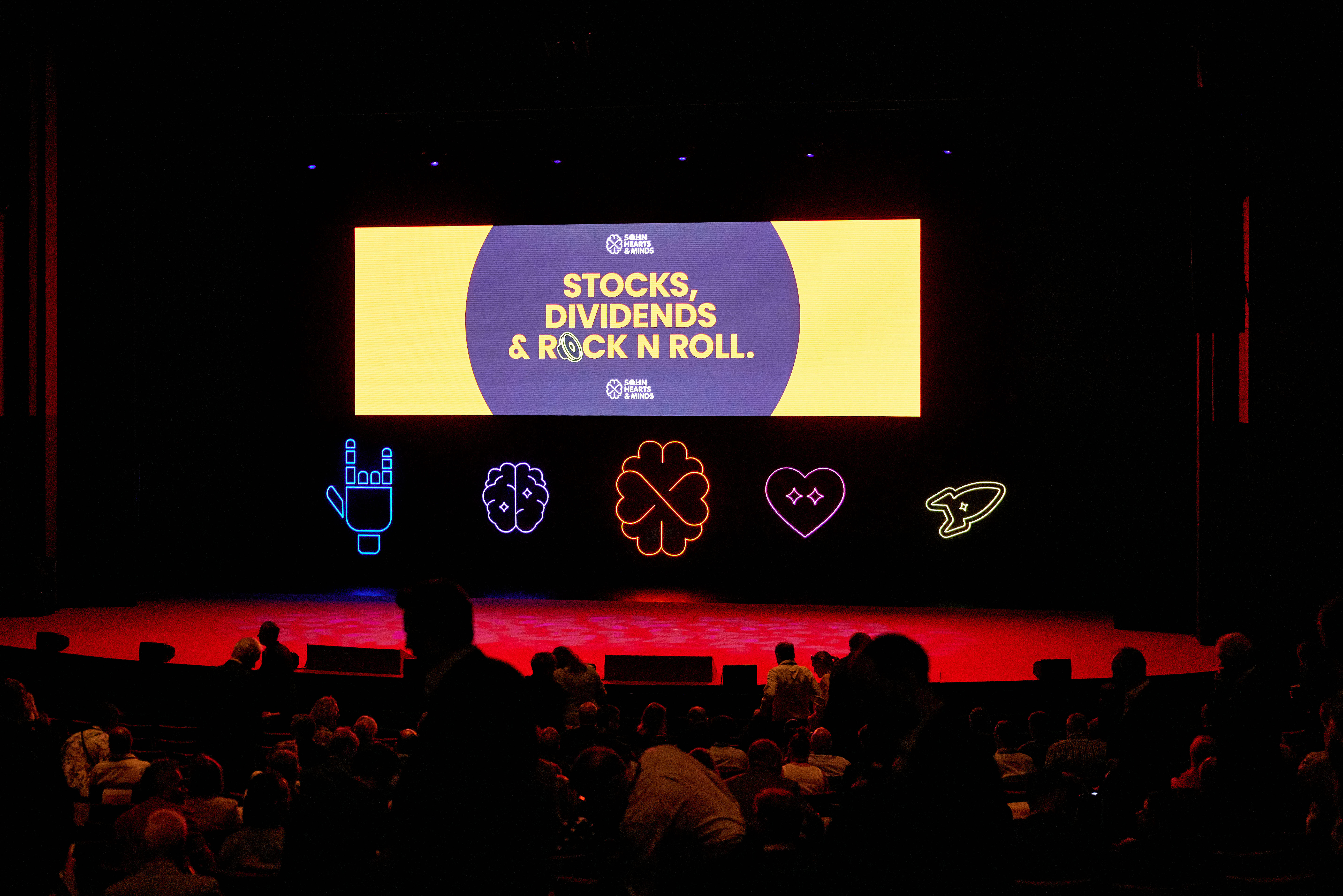
The Sohn Hearts & Minds conference will be held at the Sydney Opera House on November 17.

But according to Dr Attia - who will speak at the Sohn Hearts & Minds in Sydney next month - nothing is completely random. He has built a career unearthing about what fuels a long life and shared his knowledge in the bestselling book Outlive: The Science & Art of Longevity.

And what creates a long life is less complex and less expensive than it appears. In fact, if you followed it literally, it would send you off to sleep.

Embracing boredom, is Dr Attia’s main piece of advice. It appears to fly in the face of Bob Dylan’s wisdom of a man who is “not busy being born is busy dying”. But being bored, surprisingly, has significant health benefits.


“I will say that it is probably the single hardest thing for high achieving people to do. And it‘s a discomfort that is almost unimaginable,” Dr Attia says.

“I think boredom is a very important thing. I think it‘s very healthy for us to be bored and Mother Nature/natural selection has hard wired us to not want to spend much time in that situation.

“And ironically, it might be more important today than it was 100,000 years ago. You could argue maybe 100,000 years ago, it wasn’t that important and that’s why natural selection made it so uncomfortable. But today, the world we live in could not have been anticipated by Darwin, and by Darwin I don’t mean the actual person of course, I mean, the forces of natural selection. And that’s I think exactly why in this hyperstimulating world, we all need a way to be bored.”

Dr Attia is highlighting the need to be able to switch off and rest - a tough task in the modern ‘always on’ era, where extreme business has become the norm. People can communicate like never before - receiving on average more than hundreds of notifications a day via text messages, social media alerts, emails advertising and more. It’s creating digital overload that is a main cause of flatlining productivity as more employees become burnt out.

“We need a way to be in nature,” Dr Attia says while speaking to The Weekend Australian on a video call.

“I mean, think about it, the fact that I‘m looking at you on a screen from inside an air conditioned room with perfect right angles everywhere, this can’t be really healthy for my nervous system.

“It‘s healthy for me in many ways, and I wouldn’t trade this for anything - I don’t want to be living outdoors, fending off lions and tigers. But I gave something up when I adopted this lifestyle and I think it’s important that we all spend time outdoors every single day, we all spend time in the asymmetry of nature. We all spend time looking at sunlight, we all spend time being uncomfortable in extreme temperatures.”

Peter Attia says we all need to find more time to spend outdoors.

While the Sohn Hearts & Minds conference will include rapid-fire stock picks from leading investment experts all over the globe, all of the events’ profits go to medical research with organisers targeting to raise $60m by next month.

Dr Attia labels his longevity research as medicine 3.0. He says there needs to be a shift from treating disease to preventing it in the first place, with longevity not just about reaching a ripe old age - but also living with a higher quality and more active life for longer.

“What I call medicine. 3.0 is really geared towards that degree of prevention. It‘s how do you live longer without atherosclerosis? How do you slow the progression of those things? And that’s probably where, you know, we won’t necessarily all get to be centenarians, I have no expectation that I will be given my genes, but I definitely think it adds years to life. And I think more importantly, it adds quality to life.

“To focus more on, ‘hey, when I‘m 80, how can I physically and cognitively function, the way I see a healthy 65 year old today?’ Boy, that has more bearing on the quality of your life than anything else because, you know, lifespan without healthspan is a curse.

“In fact most people are quite afraid of that. Nobody wants to live a long life and be suffering.

“So I think that what we really ought to be doing is focusing on healthspan focusing on what does the final decade of my life look like physically, cognitively, emotionally. Those are the three things that are going to define the quality of your life. And if I make sure that my actions today are setting me up, to have the best version of that final decade, what I call the marginal decade, then not only will that be exceptional, but everything leading up to it will be as well.”

And despite healthcare costs rising and the global dietary supplements market generating billions of dollars a year, Dr Attia says money can’t buy good health.

“The most expensive aspect is time. I mean, for most people to make the changes that would have the biggest impact on the length and quality of their life. Exercising every single day, eating reasonably well - yeah, that‘s going to cost a little bit more money. But it’s going to cost more time.

“It‘s good news in the sense that it’s the great equaliser. It’s bad news in that you can’t really cheat and cram for the test. You know, you can’t just say, ‘well, look, I’m willing to pay a premium for this, so therefore, I’m going to have a better experience’. I mean, it doesn’t really work that way.

“There are very, very wealthy people who have incredibly poor health. That there and then tells you, you can‘t really buy health. You can’t. On average, certainly poor socioeconomic status is associated with worse health. But at the individual level, that’s completely untrue - that’s evidenced by the fact that some of the richest people in the world are some of the least healthy.”

This article was originally posted by The Australian here.

Licensed by Copyright Agency. You must not copy this work without permission.

Disclaimer: This material has been prepared by Australian, published on 6 October 2023. HM1 is not responsible for the content of linked websites or content prepared by third party. The inclusion of these links and third-party content does not in any way imply any form of endorsement by HM1 of the products or services provided by persons or organisations who are responsible for the linked websites and third-party content. This information is for general information only and does not consider the objectives, financial situation or needs of any person. Before making an investment decision, you should read the relevant disclosure document (if appropriate) and seek professional advice to determine whether the investment and information is suitable for you.
It was a TV show meant to promote longevity. But soon after Chris Hemsworth appeared with celebrity physician Peter Attia on Disney+ documentary series Limitless, it seemed to have cut short the actor’s career.

Headlines around the world screamed that the movie star, who has built his career on playing the Marvel superhero Thor, was taking a break from acting after it was revealed during the series that he had a genetic predisposition to Alzheimer’s disease.

Turns out the revelation that he carried two copies of the APOE4 gene - which has been linked to an increased risk of developing degenerative brain disorder - and his impending absence from movie screens, was a coincidence or conflated at the very least.

“I don’t think I’m sharing anything that Chris wouldn’t be comfortable sharing,” Dr Attia, 50, tells The Weekend Australian.

“I know Chris wasn’t taking time off because of that knowledge (that he carried the APOE4 gene). Chris was taking time off because Chris was exhausted. Chris has worked insanely hard for a decade - never not working on a project.‍

“And I think that was taking a toll on him. Regardless of what his genetic predisposition was to Alzheimer’s disease, Limitless provided a great opportunity for Chris to say ‘OK, I really do need to take a little bit of a break’ - even the production of Limitless was far more taxing than it was ever billed to any of us. In Chris’s case, he was able to take some time to recharge with his family.”

And this encapsulates Dr Attia’s main piece of advice when people ask him what is the secret to living longer.

The fountain of youth and keys to a long life has been pursued for a millennia. It’s as old as man. It’s the question centenarians get asked when they are propped up in their easy chair on their big day and get peppered with questions about how they have reached such a grand age, with their answers as varied as their years.

“I think you see why every interview with a centenarian trying to elucidate the cause of or drivers of their lifespan produces some of the most comical responses,” Dr Attia says.‍

“It could be more cigars, more cigarettes, more whiskey, more family, more commitment - it‘s a random generator of responses.”

The Sohn Hearts & Minds conference will be held at the Sydney Opera House on November 17.

But according to Dr Attia - who will speak at the Sohn Hearts & Minds in Sydney next month - nothing is completely random. He has built a career unearthing about what fuels a long life and shared his knowledge in the bestselling book Outlive: The Science & Art of Longevity.

And what creates a long life is less complex and less expensive than it appears. In fact, if you followed it literally, it would send you off to sleep.

Embracing boredom, is Dr Attia’s main piece of advice. It appears to fly in the face of Bob Dylan’s wisdom of a man who is “not busy being born is busy dying”. But being bored, surprisingly, has significant health benefits.


“I will say that it is probably the single hardest thing for high achieving people to do. And it‘s a discomfort that is almost unimaginable,” Dr Attia says.

“I think boredom is a very important thing. I think it‘s very healthy for us to be bored and Mother Nature/natural selection has hard wired us to not want to spend much time in that situation.

“And ironically, it might be more important today than it was 100,000 years ago. You could argue maybe 100,000 years ago, it wasn’t that important and that’s why natural selection made it so uncomfortable. But today, the world we live in could not have been anticipated by Darwin, and by Darwin I don’t mean the actual person of course, I mean, the forces of natural selection. And that’s I think exactly why in this hyperstimulating world, we all need a way to be bored.”

Dr Attia is highlighting the need to be able to switch off and rest - a tough task in the modern ‘always on’ era, where extreme business has become the norm. People can communicate like never before - receiving on average more than hundreds of notifications a day via text messages, social media alerts, emails advertising and more. It’s creating digital overload that is a main cause of flatlining productivity as more employees become burnt out.

“We need a way to be in nature,” Dr Attia says while speaking to The Weekend Australian on a video call.

“I mean, think about it, the fact that I‘m looking at you on a screen from inside an air conditioned room with perfect right angles everywhere, this can’t be really healthy for my nervous system.

“It‘s healthy for me in many ways, and I wouldn’t trade this for anything - I don’t want to be living outdoors, fending off lions and tigers. But I gave something up when I adopted this lifestyle and I think it’s important that we all spend time outdoors every single day, we all spend time in the asymmetry of nature. We all spend time looking at sunlight, we all spend time being uncomfortable in extreme temperatures.”

Peter Attia says we all need to find more time to spend outdoors.

While the Sohn Hearts & Minds conference will include rapid-fire stock picks from leading investment experts all over the globe, all of the events’ profits go to medical research with organisers targeting to raise $60m by next month.

Dr Attia labels his longevity research as medicine 3.0. He says there needs to be a shift from treating disease to preventing it in the first place, with longevity not just about reaching a ripe old age - but also living with a higher quality and more active life for longer.

“What I call medicine. 3.0 is really geared towards that degree of prevention. It‘s how do you live longer without atherosclerosis? How do you slow the progression of those things? And that’s probably where, you know, we won’t necessarily all get to be centenarians, I have no expectation that I will be given my genes, but I definitely think it adds years to life. And I think more importantly, it adds quality to life.

“To focus more on, ‘hey, when I‘m 80, how can I physically and cognitively function, the way I see a healthy 65 year old today?’ Boy, that has more bearing on the quality of your life than anything else because, you know, lifespan without healthspan is a curse.

“In fact most people are quite afraid of that. Nobody wants to live a long life and be suffering.

“So I think that what we really ought to be doing is focusing on healthspan focusing on what does the final decade of my life look like physically, cognitively, emotionally. Those are the three things that are going to define the quality of your life. And if I make sure that my actions today are setting me up, to have the best version of that final decade, what I call the marginal decade, then not only will that be exceptional, but everything leading up to it will be as well.”

And despite healthcare costs rising and the global dietary supplements market generating billions of dollars a year, Dr Attia says money can’t buy good health.

“The most expensive aspect is time. I mean, for most people to make the changes that would have the biggest impact on the length and quality of their life. Exercising every single day, eating reasonably well - yeah, that‘s going to cost a little bit more money. But it’s going to cost more time.

“It‘s good news in the sense that it’s the great equaliser. It’s bad news in that you can’t really cheat and cram for the test. You know, you can’t just say, ‘well, look, I’m willing to pay a premium for this, so therefore, I’m going to have a better experience’. I mean, it doesn’t really work that way.

“There are very, very wealthy people who have incredibly poor health. That there and then tells you, you can‘t really buy health. You can’t. On average, certainly poor socioeconomic status is associated with worse health. But at the individual level, that’s completely untrue - that’s evidenced by the fact that some of the richest people in the world are some of the least healthy.”

This article was originally posted by The Australian here.

Licensed by Copyright Agency. You must not copy this work without permission.

Disclaimer: This material has been prepared by Australian, published on 6 October 2023. HM1 is not responsible for the content of linked websites or content prepared by third party. The inclusion of these links and third-party content does not in any way imply any form of endorsement by HM1 of the products or services provided by persons or organisations who are responsible for the linked websites and third-party content. This information is for general information only and does not consider the objectives, financial situation or needs of any person. Before making an investment decision, you should read the relevant disclosure document (if appropriate) and seek professional advice to determine whether the investment and information is suitable for you.

Disclaimer: This material has been prepared by The Australian, published on Oct 06, 2023. HM1 is not responsible for the content of linked websites or content prepared by third party. The inclusion of these links and third-party content does not in any way imply any form of endorsement by HM1 of the products or services provided by persons or organisations who are responsible for the linked websites and third-party content. This information is for general information only and does not consider the objectives, financial situation or needs of any person. Before making an investment decision, you should read the relevant disclosure document (if appropriate) and seek professional advice to determine whether the investment and information is suitable for you.

facebook
linkedin
All
Thank you! Your submission has been received!
Oops! Something went wrong while submitting the form.
March 14, 2025

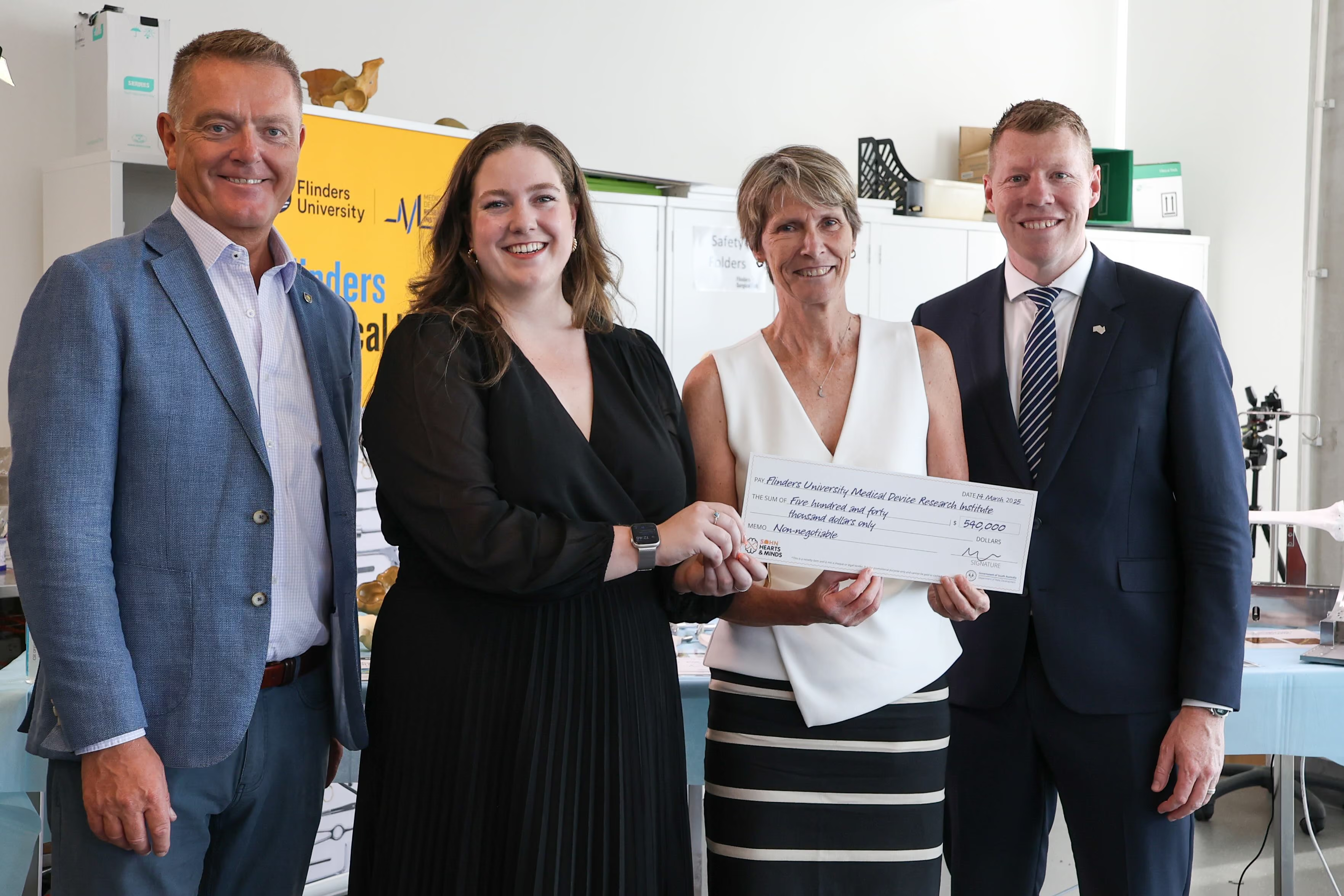
$1.4 million boost for SA medical research

South Australian medical research will receive a $1.4 million cash injection, as a direct result of a major investment and philanthropy conference held in Adelaide.

Read More
Anthony Scaramucci’s time in the White House was brief but memorable. APAnthony Scaramucci’s time in the White House was brief but memorable. APAnthony Scaramucci’s time in the White House was brief but memorable. APAnthony Scaramucci’s time in the White House was brief but memorable. AP
May 19, 2025

Why ‘The Mooch’ thinks Trump is more dangerous this time around

Anthony Scaramucci says Trump has fewer constraints on his worst instincts in his second administration. But he still gets bored easily.

Read More
Image caption: Anthony “The Mooch” Scaramucci at the New York headquarters of his SkyBridge Capital last week. Picture: Jaclyn LichtImage caption: Anthony “The Mooch” Scaramucci at the New York headquarters of his SkyBridge Capital last week. Picture: Jaclyn LichtImage caption: Anthony “The Mooch” Scaramucci at the New York headquarters of his SkyBridge Capital last week. Picture: Jaclyn LichtImage caption: Anthony “The Mooch” Scaramucci at the New York headquarters of his SkyBridge Capital last week. Picture: Jaclyn Licht
May 19, 2025

My biggest mistake: Anthony Scaramucci on what makes Donald Trump tick

On Elon Musk, money and the White House, fast-talking Wall Street hedge fund manager and former Trump communications director Anthony Scaramucci tells it as he sees it.

Read More
A bull case for Bitcoin even as it trades near record levels. Picture: AFPA bull case for Bitcoin even as it trades near record levels. Picture: AFPA bull case for Bitcoin even as it trades near record levels. Picture: AFPA bull case for Bitcoin even as it trades near record levels. Picture: AFP
May 19, 2025

Bitcoin ‘on track’ for $US200,000: Anthony Scaramucci

Bitcoin could hit as much as $US200,000 ($311,000) by the end of this year, fuelled by surging inflows into exchange-traded funds and Donald Trump’s erratic policymaking.

Read More
Anthony Scaramucci says America has no choice but to lower tariffs on China further. Jaclyn LichtAnthony Scaramucci says America has no choice but to lower tariffs on China further. Jaclyn LichtAnthony Scaramucci says America has no choice but to lower tariffs on China further. Jaclyn LichtAnthony Scaramucci says America has no choice but to lower tariffs on China further. Jaclyn Licht
May 19, 2025

‘The Mooch’ says Trump will have to cut China tariffs below 10pc

Scaramucci, who is best known as The Mooch, is the first big-name global investor to be confirmed for the Sohn Hearts & Minds conference in Sydney in November.

Read More
Matthew McLennan in his office at First Eagle Investments in New York. Picture: Jaclyn LichtMatthew McLennan in his office at First Eagle Investments in New York. Picture: Jaclyn LichtMatthew McLennan in his office at First Eagle Investments in New York. Picture: Jaclyn LichtMatthew McLennan in his office at First Eagle Investments in New York. Picture: Jaclyn Licht
July 7, 2025

A golden year for Wall Street’s Australian stock picker

Matthew McLennan’s $14.5 billion position in gold bars and miners paid off handsomely for First Eagle this year. But he insists the precious metal still has room to run.

Read More
Stillpoint Investments founder and chief investment officer Eric Wong. Picture: Jaclyn LichtStillpoint Investments founder and chief investment officer Eric Wong. Picture: Jaclyn LichtStillpoint Investments founder and chief investment officer Eric Wong. Picture: Jaclyn LichtStillpoint Investments founder and chief investment officer Eric Wong. Picture: Jaclyn Licht
September 25, 2025

Stillpoint founder Eric Wong reveals major China tech investment strategy

Eric Wong will present his investment case at the Sohn Hearts & Minds conference at the Sydney Opera House on Friday, November 14.

Read More
October 1, 2025

Billionaire hedge fund manager enacts ‘little short’ on the market

Investing veteran Lord Michael Hintze says he’s taking out insurance against expensive debt and equity markets that are being propelled by passive flows.

Read More
October 1, 2025

Hedge fund guru Michael Hintze can't out-trade machines but he can still 'out-invest' them

Billionaire hedge fund manager Michael Hintze says the world is more dangerous than he has ever seen, artificial intelligence is stifling people’s ability to learn and process information.

Read More
Marathon Resource Advisors founder and chief investment officer Robert Mullin in San Francisco.Marathon Resource Advisors founder and chief investment officer Robert Mullin in San Francisco.Marathon Resource Advisors founder and chief investment officer Robert Mullin in San Francisco.Marathon Resource Advisors founder and chief investment officer Robert Mullin in San Francisco.
October 5, 2025

Marathon CIO Robert Mullin reveals why gold stocks are still undervalued

The son of a stockbroker, Mr Mullin has more than 30 years' investing experience and is chief investment officer at Marathon Resource Advisors in San Francisco, a company he founded.

Read More
First Eagle Investments co-head of global value Matthew McLennan. Picture: Jaclyn LichtFirst Eagle Investments co-head of global value Matthew McLennan. Picture: Jaclyn LichtFirst Eagle Investments co-head of global value Matthew McLennan. Picture: Jaclyn LichtFirst Eagle Investments co-head of global value Matthew McLennan. Picture: Jaclyn Licht
October 6, 2025

First Eagle’s Matthew McLennan on the monetary force that could be ‘rocket fuel’ for the Australian dollar

Matthew McLennan, the co-head of the global value team and portfolio manager at the $US161bn ($243bn) First Eagle Investments, stormed the market with a bullish bet on gold.

Read More
October 10, 2025

Anthony Scaramucci’s advice to our PM is to seek his Canadian counterpart’s counsel

Beyond Wall Street, The Mooch is better known for his cutting takes on US politics in the popular podcast The Rest is Politics: US, which he hosts with BBC’s long-term North American correspondent Katty Kay.

Read More
October 19, 2025

Munro Partners' Qiao Ma reveals AI investment strategy

Qiao Ma has a simple test for spotting the investment opportunities that will define the next decade. Take the technology apart and see what’s inside.

Read More
October 21, 2025

Meet the 2025 Conference Managers

Following a global search, the Conference Fund Manager Selection Committee is pleased to share ten new managers for 2025.

Read More
October 31, 2025

The 42pc gain that shows why Sohn is a stock picker’s delight

It turns out you could have outperformed the seemingly unstoppable magnificent seven tech stocks if you simply acted on the 11 stock picks at Sohn last year.

Read More
December 10, 2024

Professor Jane Butler: Sparking Hope for Spinal Cord Injuries

In this episode of the Hearts & Minds Podcast, we sit down with Professor Jane Butler to discuss her groundbreaking research into spinal cord injuries.

Read More
impact-podcasts
September 24, 2024

Asian Market Potential with Tom Naughton of Prusik

CIO Charlie Lanchester sits down with Tom Naughton, CIO of Prusik Investment Mgmt. Tom shares his investment philosophy, the opportunities and challenges in Asian markets, and how his 2023 conference stock pick, Swire Pacific (0019.HK), delivered an impressive 30% return.

Read More
investing
September 4, 2024

Building Hearts and Minds with Co-Founders Matthew Grounds and Guy Fowler

In this episode, co-founders Matthew Grounds AM and Guy Fowler OAM discuss their journey in building Hearts & Minds and its philanthropic model that has donated over $70 million to medical research.

Read More
investing
June 25, 2024

Navigating the Resource Sector with Jeremy Bond of Terra Capital

In this episode, we chat with Jeremy Bond, Founder of Terra Capital and HM1 Conference Fund Manager. Tune in for insights into the world of resource investments and the exciting opportunities that lie ahead.

Read More
investing
June 11, 2024

Prof. Nadia Badawi on Cerebral Palsy Breakthroughs and Neonatal Care

Dive deep into the groundbreaking work of Professor Nadia Badawi, an internationally recognised neonatologist and expert in Cerebral Palsy.

Read More
impact-podcasts
May 28, 2024

Investment Insights: Rikki Bannan on Top Picks and Trends

Join us for an engaging episode featuring Rikki Bannan, Portfolio Manager of IFM Investors and HM1 Conference Fund Manager. This episode explores Rikki's career journey, investment strategies, and her 2023 conference stock pick, Telix Pharmaceuticals (ASX.TLX).

Read More
investing
December 6, 2023

Peter Cooper talks building and instilling a culture of humility and excellence

In this episode, our guest is the renowned investor, Peter Cooper, founder and Chief Investment Officer of Cooper Investors (Core Fund Manager). A founding supporter of Hearts and Minds, Peter is a staunch advocate of our model and its philanthropic purpose, actively engaging in every facet of Hearts and Minds.

Read More
investing
November 28, 2023

Jun Bei Liu on her high conviction investment strategy

In this episode, HM1 Chief Investment Officer Charlie Lanchester is joined by Jun Bei Liu. Jun Bei is the Portfolio Manager of Tribeca’s Alpha Plus Fund and since taking over managing the Fund, she has quadrupled AUM.

Read More
investing
November 21, 2023

The world of rare genetic disease research

In this episode, we speak to Associate Professor Gina Ravenscroft. Gina is an Associate Professor in Neurogenetics at the Harry Perkins Institute of Medical Research in Perth. Her research interests are in rare genetic diseases, with a particular focus on neurogenetic diseases in babies and children.

Read More
impact-podcasts
November 14, 2023

Learn what makes a high conviction investment and how to avoid short-term noise

In this episode, our Core Fund Manager Magellan shares how they select top stocks for the HM1 portfolio.

Read More
investing
November 7, 2023

Delve into the world of kids critical care and trauma research

In thie episode, we are joined by Dr. Marino Festa, or Rino for short. He is the Medical Director of NSW Kids ECMO Referral Service and a senior specialist in Paediatric Intensive Care at Children’s Hospital at Westmead.

Read More
impact-podcasts
October 31, 2023

Where Regal's Phil King is searching for opportunities

HM1's CIO, Charlie Lanchester, talks to Phil King of Regal Funds about his passion for stocks, his ongoing search for opportunities, and some of the sectors he’s excited by right now. Phil King of Regal Funds, has been a tremendous supporter of Hearts & Minds since the beginning.

Read More
investing
October 24, 2023

Preventing recurrent miscarriages and birth defects

In this episode, CEO Paul Rayson is joined by renowned biomedical researcher Professor Sally Dunwoodie. Prof. Dunwoodie's groundbreaking work has revolutionised clinical practices and enabled genetic diagnostic tests worldwide. In 2017, her team achieved a double breakthrough with the potential to prevent recurrent miscarriages and various birth defects.

Read More
impact-podcasts
October 17, 2023

Nick Griffin on how he finds global winners

In this episode, CIO Charlie Lanchester chats with Nick Griffin, the founding partner and CIO of Munro Partners, one of HM1's Core Fund Managers. They go over his career to date, reflect on the lessons he’s learned, and trace the decisions that led to him starting Munro.

Read More
investing
October 10, 2023

How A/Prof Matt Call is teaching our body to kill cancer

In this episode, CEO Paul Rayson is joined by WEHI’s Associate Professor Matt Call to talk about his incredible research. Matt’s team teaches and trains the body's own immune cells to target and kill cancer cells.

Read More
impact-podcasts

No results found.

Please try a different search keyword or filter.