Concentration risk key for investors: Antipodes Partners’ Vihari Ross

The concentration risk in global stock indexes that has built up during the strong rise over the past year must now be a key consideration for global investors, according to Vihari Ross.
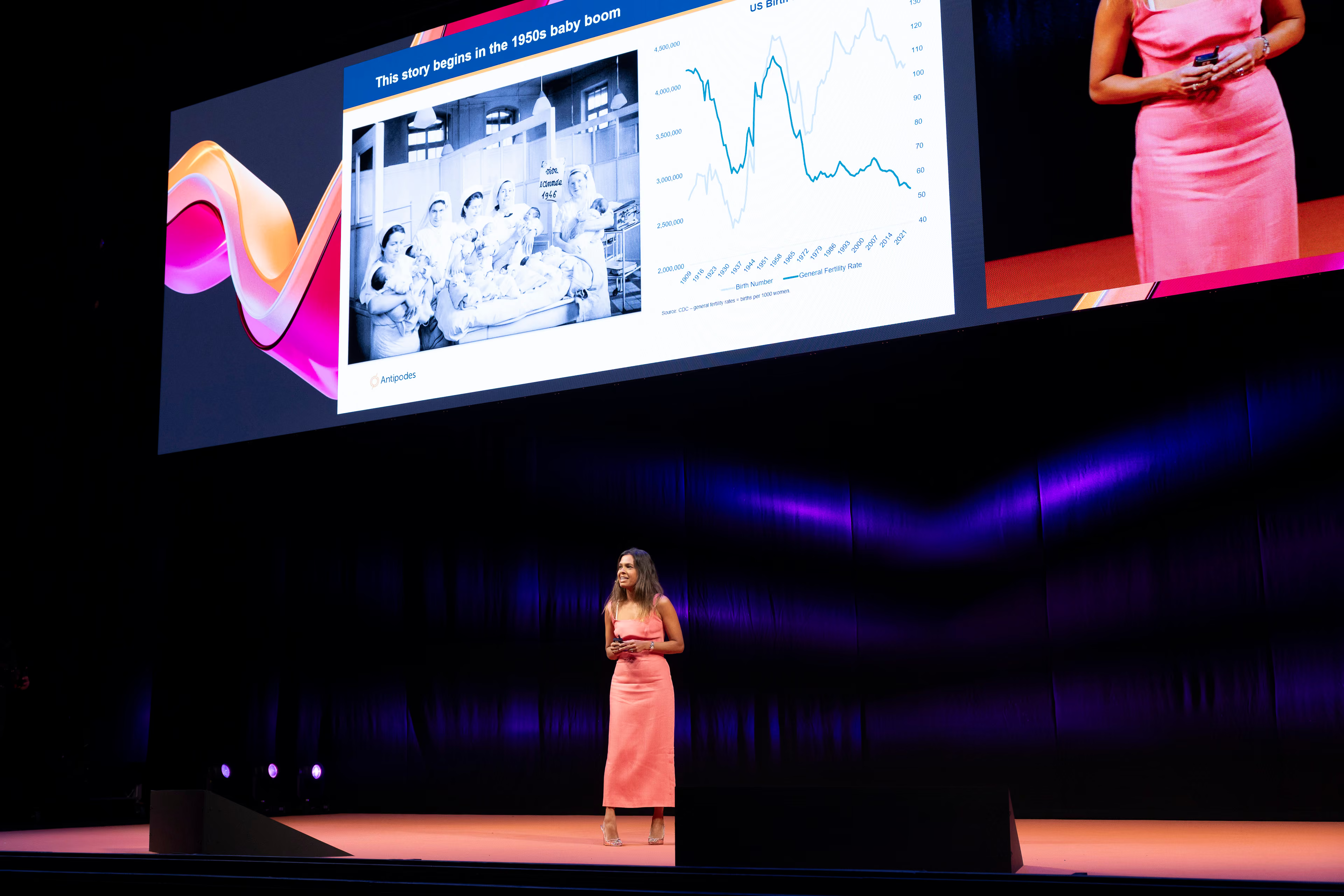
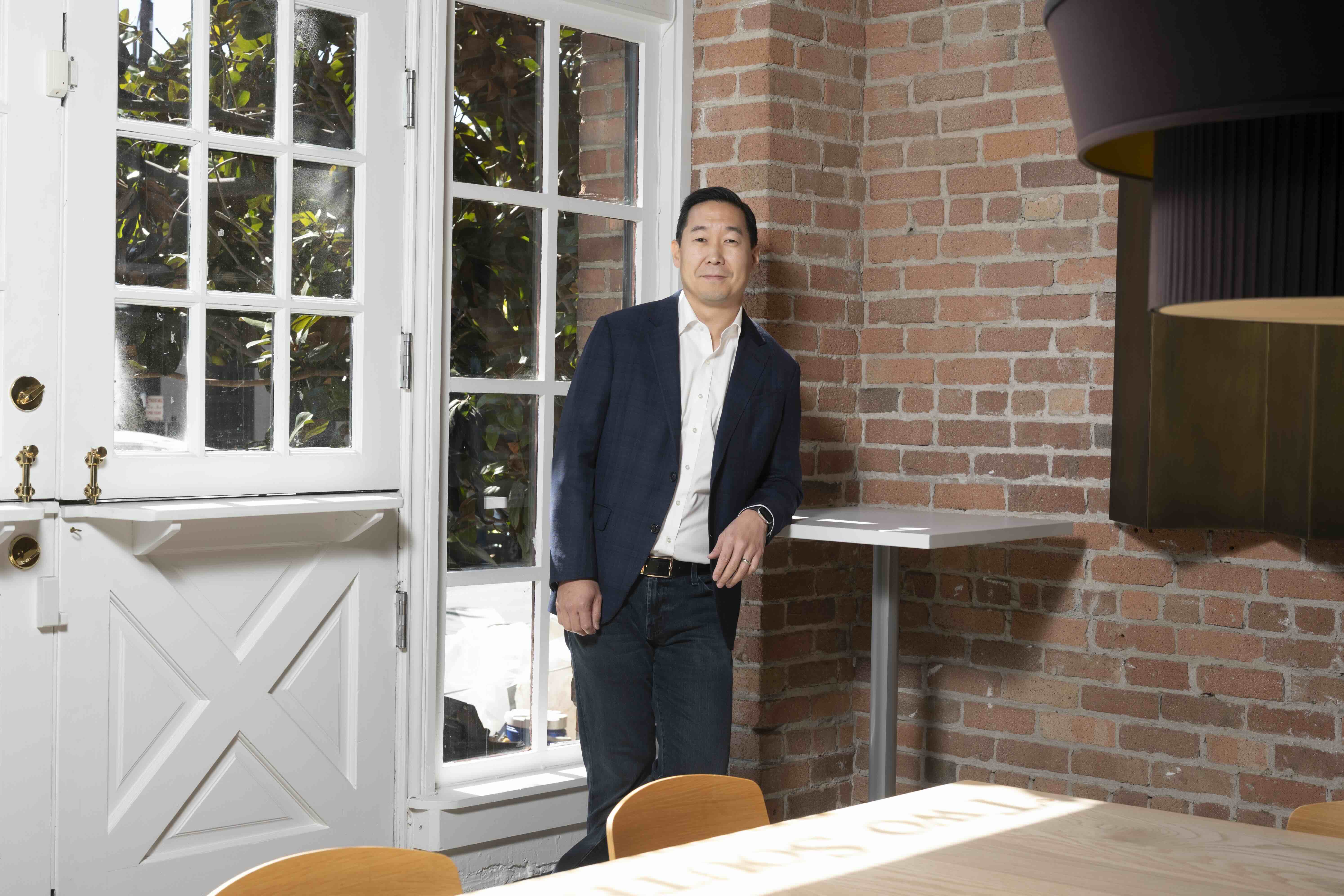
Antipodes Partners portfolio manager Vihari Ross: ‘We ask where the overvaluation is and where the opportunity is.’ Picture: John Feder

David Rogers

Concentration risk key for investors: Antipodes Partners’ Vihari Ross

November 5, 2024
The concentration risk in global stock indexes that has built up during the strong rise over the past year must now be a key consideration for global investors, according to Vihari Ross.
Read Transcript

It has been a great year for parts of the market but the dominance of the so-called Magnificent 7 in ­global stock benchmarks has caused a great deal of concentration risk and the valuation of some large US “quality” companies, including AI and weight-loss stock, has stretched.
 
While that may have caused some active fund managers to underperform the market at times, investors need to look elsewhere for better risk-adjusted returns, according to Vihari Ross.
 
The Antipodes Partners portfolio manager will reveal her Sohn Hearts & Minds stock tips at the prestigious conference in ­Adelaide on November 15.
 
While Antipodes does have shares in some of the tech giants, Ms Ross won’t be telling attendees to load up on these market darlings after their spectacular rise in the past two years.
 
The S&P 500 has risen 33 per cent in the past 12 months, mostly driven by a 50 per cent gain in the so-called Magnificent 7 index of tech giants. Nvidia has soared over 200 per cent in that time.
 
But while the AI boom shows no sign of stopping, the sell-offs associated with the TMT bubble and the Nifty Fifty era show what can eventually happen when valuations are too stretched.
 
“We’re in a stage of the market now where we where it’s obviously become very concentrated,” Ms Ross said. “It’s concentrated in the US and it’s concentrated in a small number of tech companies.
 
“When that level of concentration happens, it doesn’t last.”
 
Ms Ross was previously head of research at Magellan Financial Group. She designed the Core International portfolio for Magellan and also covered the financial and consumer sectors as an analyst during her 15 years at the global fund manager.
 
As a high-conviction value investor, Antipodes aims to profit from situations where markets overreact to unexpected change so as to build portfolios of attractively valued, quality stocks. Its focus is risk-adjusted returns, in order to protect against unexpected volatility and drawdowns.
 
Global equities offer the ­potential for higher returns and reduced risk via diversification.
 
But BofA has estimated that the Magnificent 7 now make up nearly one-third of the S&P 500’s entire market capitalisation and have accounted for about 50 per cent of its return so far this year.
 
“As value managers, we ask where the overvaluation is and where the opportunity is,” Mr Ross said. “Because whenever these concentration peaks dissipate, the expensive stocks fall and there’s also a broadening out of broadening out (of performance) in cheaper stocks.”
 
To gauge this “value dispersion”, Antipodes compares the price-to-earnings multiples of the cheapest versus the most expensive stocks in its investing universe. “That value dispersion is really wide right now, which means as much as people say there’s a whole bunch of really expensive stocks out there, there’s actually a lot of value opportunities out there as well,” Ms Ross said.
 
In terms of locating the overvaluation in global equities, she says it’s concentrated in larger US companies, and also the quality and growth “factors”, as opposed to that value factor.
 
An obvious cause of the concentration in quality companies – which typically have high cash flows – was the massive rise in interest rates since the Covid-19 pandemic. But that has now peaked.
 
“That’s exactly the right question, because quality is not just about big cap tech companies,” Ms Ross said. “We own shares in some of those companies and we will continue to have exposure. Some of them are certainly overvalued, but the broader large cap, US, quality, expensiveness, isn’t necessarily all about tech. There are many other companies that have just rerated massively.”
 
Health care is a good example as the share price performance of weight-loss drugs has seen the likes of Eli Lily and Novo Nordisk parallel that of the AI-fuelled surge in Nvidia.
 
“There’s this sort of singular success being ascribed to one or two companies here in the same way as AI, and you’re going ‘hang on, competition is coming’, Ms Ross said. “Unfortunately many overweight people in the US can’t afford these drugs and nor do they have access to them. Many things need to fall into place, even without the competitive dynamics, such as people coming up with oral solutions, people coming up with solutions that don’t make you feel sick.”
 
It comes as Viking Therapeutics said that higher doses of its experimental pill increased patients’ weight loss beyond earlier formulations, strengthening its case to eventually compete with blockbuster shots from Novo Nordisk and Eli Lilly. Shares of Nasdaq-listed Viking have quadrupled this year as investors bet that it will crack the market for obesity drugs that’s estimated to hit $US130bn ($197bn) by the end of the decade.
 
Easy-to-administer pills are expected to have a big impact as an alternative to injections that now dominate the market, Bloomberg reported.
 
“One of the things that we ­really care about at Antipodes and a key part about how I invest is thinking about change,” Ms Ross said. “That’s really important in the context of what is quality, because if you have a business that is high quality, or you think this is high quality, and I’m going to set that view in concrete, and that’s it, what actually matters more is not that initial view, it’s actually what’s going to happen next.”
 
That means looking five to 10 years ahead, for the change that could take place in the industry, or an individual company, in order to understand that winners and losers are going to emerge.
 
It could be a cyclical shift or a structural shift that disrupts the current leaders.
 
“We can misjudge those ­because they happen fast, or they happen exponentially, or they happen slowly at first and then happen fast. It’s almost part and parcel of tech and healthcare,” Ms Ross added.
 
“They have to keep disrupting the status quo”.
 
The 2024 event will explore themes including space, AI, geopolitics, biosciences and investing. All profits will be donated to medical research.


This article was originally posted by The Australian here.

Licensed by Copyright Agency. You must not copy this work without permission.

Disclaimer: This material has been prepared by The Australian, published on 11 May 2024. HM1 is not responsible for the content of linked websites or content prepared by third party. The inclusion of these links and third-party content does not in any way imply any form of endorsement by HM1 of the products or services provided by persons or organisations who are responsible for the linked websites and third-party content. This information is for general information only and does not consider the objectives, financial situation or needs of any person. Before making an investment decision, you should read the relevant disclosure document (if appropriate) and seek professional advice to determine whether the investment and information is suitable for you.

It has been a great year for parts of the market but the dominance of the so-called Magnificent 7 in ­global stock benchmarks has caused a great deal of concentration risk and the valuation of some large US “quality” companies, including AI and weight-loss stock, has stretched.
 
While that may have caused some active fund managers to underperform the market at times, investors need to look elsewhere for better risk-adjusted returns, according to Vihari Ross.
 
The Antipodes Partners portfolio manager will reveal her Sohn Hearts & Minds stock tips at the prestigious conference in ­Adelaide on November 15.
 
While Antipodes does have shares in some of the tech giants, Ms Ross won’t be telling attendees to load up on these market darlings after their spectacular rise in the past two years.
 
The S&P 500 has risen 33 per cent in the past 12 months, mostly driven by a 50 per cent gain in the so-called Magnificent 7 index of tech giants. Nvidia has soared over 200 per cent in that time.
 
But while the AI boom shows no sign of stopping, the sell-offs associated with the TMT bubble and the Nifty Fifty era show what can eventually happen when valuations are too stretched.
 
“We’re in a stage of the market now where we where it’s obviously become very concentrated,” Ms Ross said. “It’s concentrated in the US and it’s concentrated in a small number of tech companies.
 
“When that level of concentration happens, it doesn’t last.”
 
Ms Ross was previously head of research at Magellan Financial Group. She designed the Core International portfolio for Magellan and also covered the financial and consumer sectors as an analyst during her 15 years at the global fund manager.
 
As a high-conviction value investor, Antipodes aims to profit from situations where markets overreact to unexpected change so as to build portfolios of attractively valued, quality stocks. Its focus is risk-adjusted returns, in order to protect against unexpected volatility and drawdowns.
 
Global equities offer the ­potential for higher returns and reduced risk via diversification.
 
But BofA has estimated that the Magnificent 7 now make up nearly one-third of the S&P 500’s entire market capitalisation and have accounted for about 50 per cent of its return so far this year.
 
“As value managers, we ask where the overvaluation is and where the opportunity is,” Mr Ross said. “Because whenever these concentration peaks dissipate, the expensive stocks fall and there’s also a broadening out of broadening out (of performance) in cheaper stocks.”
 
To gauge this “value dispersion”, Antipodes compares the price-to-earnings multiples of the cheapest versus the most expensive stocks in its investing universe. “That value dispersion is really wide right now, which means as much as people say there’s a whole bunch of really expensive stocks out there, there’s actually a lot of value opportunities out there as well,” Ms Ross said.
 
In terms of locating the overvaluation in global equities, she says it’s concentrated in larger US companies, and also the quality and growth “factors”, as opposed to that value factor.
 
An obvious cause of the concentration in quality companies – which typically have high cash flows – was the massive rise in interest rates since the Covid-19 pandemic. But that has now peaked.
 
“That’s exactly the right question, because quality is not just about big cap tech companies,” Ms Ross said. “We own shares in some of those companies and we will continue to have exposure. Some of them are certainly overvalued, but the broader large cap, US, quality, expensiveness, isn’t necessarily all about tech. There are many other companies that have just rerated massively.”
 
Health care is a good example as the share price performance of weight-loss drugs has seen the likes of Eli Lily and Novo Nordisk parallel that of the AI-fuelled surge in Nvidia.
 
“There’s this sort of singular success being ascribed to one or two companies here in the same way as AI, and you’re going ‘hang on, competition is coming’, Ms Ross said. “Unfortunately many overweight people in the US can’t afford these drugs and nor do they have access to them. Many things need to fall into place, even without the competitive dynamics, such as people coming up with oral solutions, people coming up with solutions that don’t make you feel sick.”
 
It comes as Viking Therapeutics said that higher doses of its experimental pill increased patients’ weight loss beyond earlier formulations, strengthening its case to eventually compete with blockbuster shots from Novo Nordisk and Eli Lilly. Shares of Nasdaq-listed Viking have quadrupled this year as investors bet that it will crack the market for obesity drugs that’s estimated to hit $US130bn ($197bn) by the end of the decade.
 
Easy-to-administer pills are expected to have a big impact as an alternative to injections that now dominate the market, Bloomberg reported.
 
“One of the things that we ­really care about at Antipodes and a key part about how I invest is thinking about change,” Ms Ross said. “That’s really important in the context of what is quality, because if you have a business that is high quality, or you think this is high quality, and I’m going to set that view in concrete, and that’s it, what actually matters more is not that initial view, it’s actually what’s going to happen next.”
 
That means looking five to 10 years ahead, for the change that could take place in the industry, or an individual company, in order to understand that winners and losers are going to emerge.
 
It could be a cyclical shift or a structural shift that disrupts the current leaders.
 
“We can misjudge those ­because they happen fast, or they happen exponentially, or they happen slowly at first and then happen fast. It’s almost part and parcel of tech and healthcare,” Ms Ross added.
 
“They have to keep disrupting the status quo”.
 
The 2024 event will explore themes including space, AI, geopolitics, biosciences and investing. All profits will be donated to medical research.


This article was originally posted by The Australian here.

Licensed by Copyright Agency. You must not copy this work without permission.

Disclaimer: This material has been prepared by The Australian, published on 11 May 2024. HM1 is not responsible for the content of linked websites or content prepared by third party. The inclusion of these links and third-party content does not in any way imply any form of endorsement by HM1 of the products or services provided by persons or organisations who are responsible for the linked websites and third-party content. This information is for general information only and does not consider the objectives, financial situation or needs of any person. Before making an investment decision, you should read the relevant disclosure document (if appropriate) and seek professional advice to determine whether the investment and information is suitable for you.

Disclaimer: This material has been prepared by The Australian, published on Nov 05, 2024. HM1 is not responsible for the content of linked websites or content prepared by third party. The inclusion of these links and third-party content does not in any way imply any form of endorsement by HM1 of the products or services provided by persons or organisations who are responsible for the linked websites and third-party content. This information is for general information only and does not consider the objectives, financial situation or needs of any person. Before making an investment decision, you should read the relevant disclosure document (if appropriate) and seek professional advice to determine whether the investment and information is suitable for you.

facebook
linkedin
All
Thank you! Your submission has been received!
Oops! Something went wrong while submitting the form.
November 3, 2025

How to beat the market without owning Nvidia shares

Vihari Ross' global fund returned more than 20 per cent in the year to September 30 versus about 10 per cent for the benchmark without owning Nvidia, Meta, Tesla, Apple or Broadcom.

Read More
November 12, 2025

Square Peg's Ben Hensman names top picks in a hot tech sector

“We’re really looking for people who have that strong growth arc. Even though they’ve reached material scale, they’re still changing and moulding their company to move really fast, and they’re curious.”

Read More
Picture: Katje FordPicture: Katje FordPicture: Katje FordPicture: Katje Ford
November 14, 2025

'Here to pitch the parent company': Jim Chalmers' Sohn pick

The federal treasurer got into the spirit of the Sohn Hearts & Minds event with a big-picture investment tip – and a dig at our nation’s fundies.

Read More
November 14, 2025

Forget Trump volatility says top investor and focus on China threat to Australia

Australian investors should be more worried about China than sweating on Federal Reserve independence and other market obsessions to do with Donald Trump, says billionaire conservative Baron Michael Hintze.

Read More
Picture: Katje FordPicture: Katje FordPicture: Katje FordPicture: Katje Ford
November 14, 2025

Activism without proxy fights is like ‘Catholicism without hell’: Loeb

An older, wiser Dan Loeb reckons his activist approach has changed, but the Wall Street icon will never put away the big stick.

Read More
Picture: Katje FordPicture: Katje FordPicture: Katje FordPicture: Katje Ford
November 14, 2025

Net zero move good, but Libs need ‘north star’: Lord Hintze

Michael Hintze, one of Australia’s richest international ­billionaires and donor to ­conservative parties, says the Liberals are lacking a “north star” but dumping net zero was a smart move.

Read More
Picture: Katje FordPicture: Katje FordPicture: Katje FordPicture: Katje Ford
November 14, 2025

Third Point’s Loeb leads bullish investors despite stock slump

Major investors say the global economy is strong enough to withstand a bubble in artificial intelligence and turmoil in private credit markets despite a sharp fall on Wall Street and the ASX over the past week.

Read More
November 14, 2025

The 9 hottest stock tips from this year’s Sohn fund managers

Defying markets gloom, top investment chiefs pitched their best global ideas, from an “OG in AI” to a retirement giant.

Read More
Picture: Katje FordPicture: Katje FordPicture: Katje FordPicture: Katje Ford
November 14, 2025

10 top stock picks from Sohn Hearts & Minds conference 2025

Global fund managers gathered at the 2025 Sohn Hearts & Minds conference to pitch their best stock ideas. Here are all 10 tips in the order they were presented.

Read More
Photo: Kajie FordPhoto: Kajie FordPhoto: Kajie FordPhoto: Kajie Ford
November 18, 2025

Anthony Scaramucci says everyone in Trump's orbit hates him

“The Mooch”, as he’s affectionately known, is a man in high demand. He’s flown into Sydney to headline the Sohn Hearts & Minds conference at the Opera House, an investment community jamboree that raises money for charity. He landed in London the night before, and will leave Sydney the next day for the brutal 24-hour return to New York.

Read More
November 14, 2025

Queenstown to host 2026 Sohn Hearts & Minds Conference

We're thrilled to announce Queenstown, New Zealand, as the destination for the 2026 Investment Leaders Conference, to be held on Friday 6 November.

Read More
November 23, 2025

Nvidia's wild swings and 11 Sohn Hearts & Minds stock picks reviewed

Equity Mates reviewed the high conviction stock picks presented at the 2025 Sohn Hearts & Minds Conference.

Read More
December 19, 2024

Rikki Bannan – Don’t get caught up in momentum

Conference Fund Manager Rikki Bannan, Executive Director at IFM Investors, joins Equity Mates to discuss her standout 2023 stock pick, Telix, and explore what opportunities lie ahead.

Read More
Nick Moakes of the Wellcome Trust told the Sohn Hearts & Minds conference that some investors were too optimistic about a reduction in rates. Picture: Ben SearcyNick Moakes of the Wellcome Trust told the Sohn Hearts & Minds conference that some investors were too optimistic about a reduction in rates. Picture: Ben SearcyNick Moakes of the Wellcome Trust told the Sohn Hearts & Minds conference that some investors were too optimistic about a reduction in rates. Picture: Ben SearcyNick Moakes of the Wellcome Trust told the Sohn Hearts & Minds conference that some investors were too optimistic about a reduction in rates. Picture: Ben Searcy
November 20, 2024

Trump unifies top investors in decade-long bullish outlook for US

Nick Moakes, CIO of the $72 billion Wellcome Trust, told the conference that too many investors were banking on a return to the ultra-low interest rates that prevailed over the past decade.

Read More
Wall Street legend Howard Marks told the Sohn event that US exceptionalism would endure. Picture: Ben SearcyWall Street legend Howard Marks told the Sohn event that US exceptionalism would endure. Picture: Ben SearcyWall Street legend Howard Marks told the Sohn event that US exceptionalism would endure. Picture: Ben SearcyWall Street legend Howard Marks told the Sohn event that US exceptionalism would endure. Picture: Ben Searcy
November 17, 2024

Is anyone brave or stupid enough to bet against America?

Stock pickers have been punished for betting against the US. The choice between consensus and contrarianism on American exceptionalism is now harder than ever.

Read More