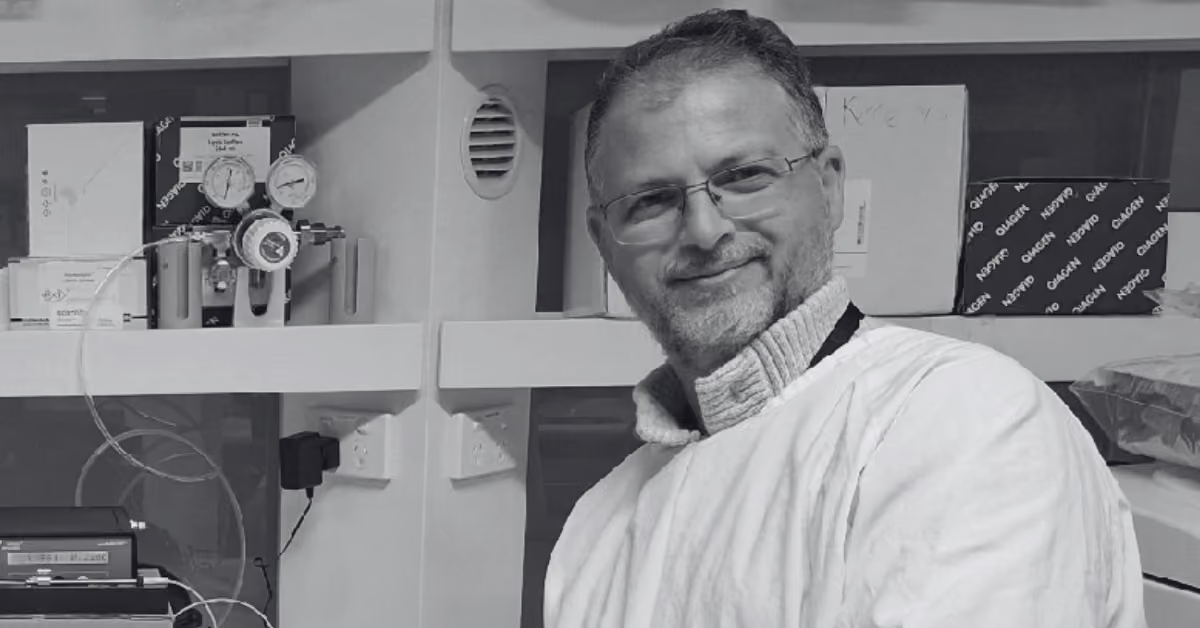
Australian breakthrough to stop heart arteries from clogging

Victor Chang scientist has led landmark research that has the potential to stop arteries of the heart from becoming clogged by targeting a particular gene.

Jill Margo

Australian breakthrough to stop heart arteries from clogging

August 3, 2021
Victor Chang scientist has led landmark research that has the potential to stop arteries of the heart from becoming clogged by targeting a particular gene.
Read Transcript

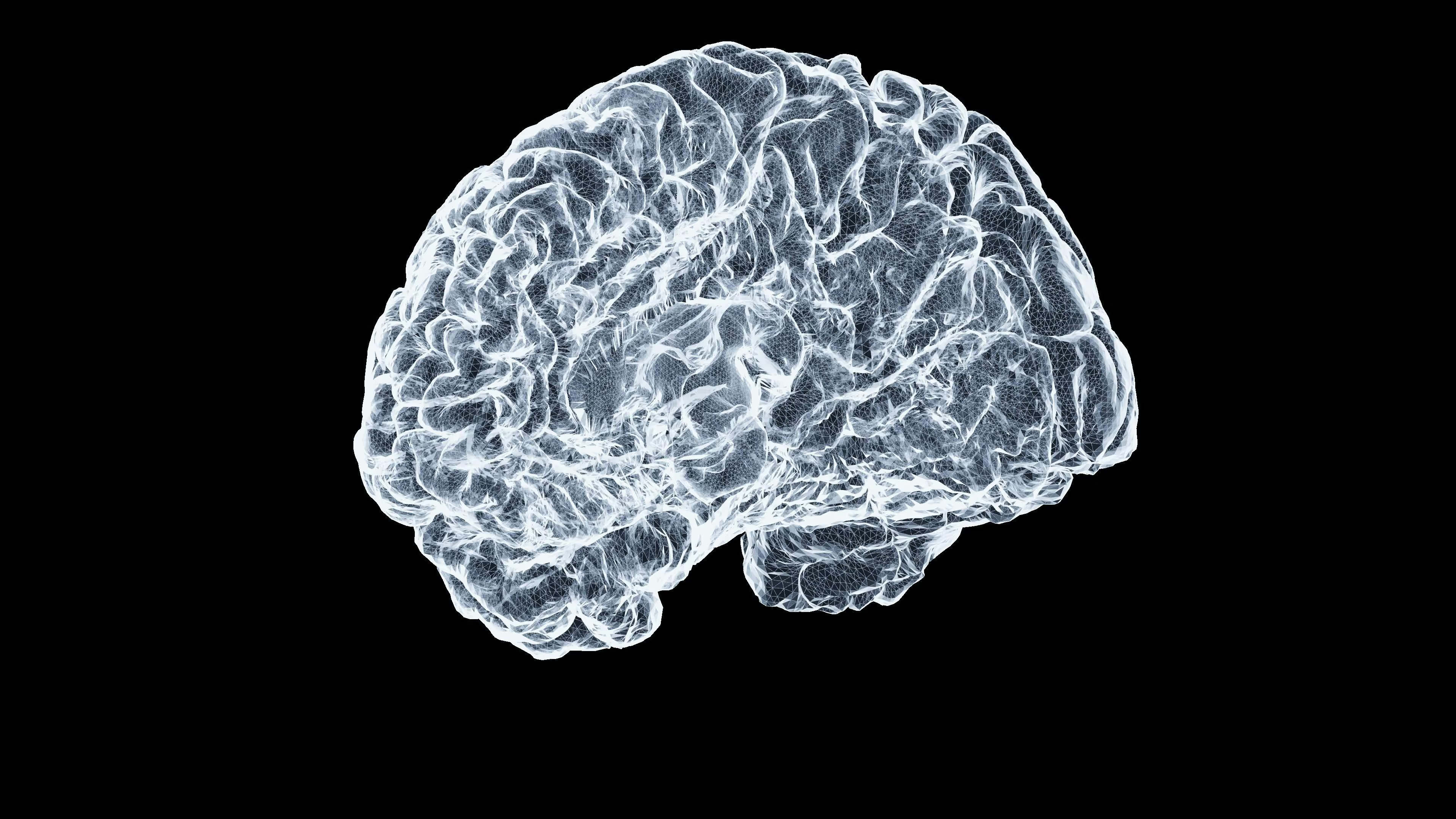
An Australian scientist has led landmark research that has the potential to stop arteries of the heart from becoming clogged. It shows that a particular gene allows plaques of fat and cholesterol to build up in the arteries.

“It’s possible to make a drug to deactivate this gene,” said Jason Kovacic, the executive director of Sydney’s Victor Chang Cardiac Research Institute.

He said there were drugs that could do this now, but they would be blunt instruments with too many side-effects.

These drugs are currently used to treat various cancers and would need to be sharpened so that they specifically targeted the gene and its effects on cells that form the lining of the heart arteries.

The fact that they exist and have been widely used would likely take at least five years off the development process of a new generation of therapies to target blood vessels.

“Cells that line the blood vessels play an incredibly important role in heart health. We’ve known for some time that there is a switch that turns these cells from being healthy to ones that drive the build-up of plaque,” Professor Kovacic said.

“After six years of research, we’ve been able to identify a key gene that controls this process, understand how it works and take a step closer to silencing it, blocking its ability from turning on in the first place.”


One in four deaths

When plaque builds up in arteries, a person has atherosclerosis. When plaque breaks away, it can form blood clots that, in turn, cause heart attacks.

“Every year millions of people die from the consequences of atherosclerosis. Drugs like statins help, but if we could stop this disease from occurring, that would be transformative in the treatment of heart disease.”

More than one in four deaths in Australia in 2018 were due to cardiovascular diseases, making it the leading cause of death in the country. And then there are millions who recover and live with the legacy of the disease.

The gene at the centre of this research is called histone deacetylase 9, or HDAC9. Several cancer drugs work on HDAC molecules in general, but because they are fairly non-selective, they tend to have a lot of side-effects. A more targeted approach is now needed.

When Professor Kovacic returned home to Australia in March 2020, he continued to run two nodes of his laboratory: one in Sydney and one at the Icahn School of Medicine at Mount Sinai in New York.

This research was based in New York, and was funded by the US National Institutes of Health, and involved an international team from the US and Europe.

There was another Australian in the team too. Dr Laura Lecce, a former postdoctoral researcher in the Kovacic Lab at Mount Sinai is the co-first author of the paper.

The research was published on Tuesday in the Journal of Clinical Investigation, which traditionally publishes studies that show major breakthroughs that have a clear line of sight to the clinic.

“At the individual level, different things cause atherosclerosis, such as high cholesterol, high blood pressure, smoking and diabetes. They all have a slightly different mechanism but this one crucial component, in the lining of the blood vessels, is key to this process,” Professor Kovacic said.

The study used cell lines derived from human cells of the arteries to the heart. “They were the exact cells where this problem is most critical and mirror the situation where heart attack can occur,” he said.

The research reflects The Victor Chang Institute growing to become an international force in fighting cardiovascular disease.


This article was originally posted on The Australian Financial Review here.

Licensed by Copyright Agency. You must not copy this work without permission.
An Australian scientist has led landmark research that has the potential to stop arteries of the heart from becoming clogged. It shows that a particular gene allows plaques of fat and cholesterol to build up in the arteries.

“It’s possible to make a drug to deactivate this gene,” said Jason Kovacic, the executive director of Sydney’s Victor Chang Cardiac Research Institute.

He said there were drugs that could do this now, but they would be blunt instruments with too many side-effects.

These drugs are currently used to treat various cancers and would need to be sharpened so that they specifically targeted the gene and its effects on cells that form the lining of the heart arteries.

The fact that they exist and have been widely used would likely take at least five years off the development process of a new generation of therapies to target blood vessels.

“Cells that line the blood vessels play an incredibly important role in heart health. We’ve known for some time that there is a switch that turns these cells from being healthy to ones that drive the build-up of plaque,” Professor Kovacic said.

“After six years of research, we’ve been able to identify a key gene that controls this process, understand how it works and take a step closer to silencing it, blocking its ability from turning on in the first place.”


One in four deaths

When plaque builds up in arteries, a person has atherosclerosis. When plaque breaks away, it can form blood clots that, in turn, cause heart attacks.

“Every year millions of people die from the consequences of atherosclerosis. Drugs like statins help, but if we could stop this disease from occurring, that would be transformative in the treatment of heart disease.”

More than one in four deaths in Australia in 2018 were due to cardiovascular diseases, making it the leading cause of death in the country. And then there are millions who recover and live with the legacy of the disease.

The gene at the centre of this research is called histone deacetylase 9, or HDAC9. Several cancer drugs work on HDAC molecules in general, but because they are fairly non-selective, they tend to have a lot of side-effects. A more targeted approach is now needed.

When Professor Kovacic returned home to Australia in March 2020, he continued to run two nodes of his laboratory: one in Sydney and one at the Icahn School of Medicine at Mount Sinai in New York.

This research was based in New York, and was funded by the US National Institutes of Health, and involved an international team from the US and Europe.

There was another Australian in the team too. Dr Laura Lecce, a former postdoctoral researcher in the Kovacic Lab at Mount Sinai is the co-first author of the paper.

The research was published on Tuesday in the Journal of Clinical Investigation, which traditionally publishes studies that show major breakthroughs that have a clear line of sight to the clinic.

“At the individual level, different things cause atherosclerosis, such as high cholesterol, high blood pressure, smoking and diabetes. They all have a slightly different mechanism but this one crucial component, in the lining of the blood vessels, is key to this process,” Professor Kovacic said.

The study used cell lines derived from human cells of the arteries to the heart. “They were the exact cells where this problem is most critical and mirror the situation where heart attack can occur,” he said.

The research reflects The Victor Chang Institute growing to become an international force in fighting cardiovascular disease.


This article was originally posted on The Australian Financial Review here.

Licensed by Copyright Agency. You must not copy this work without permission.

Disclaimer: This material has been prepared by Australian Financial Review, published on August 3, 2021. HM1 is not responsible for the content of linked websites or content prepared by third party. The inclusion of these links and third-party content does not in any way imply any form of endorsement by HM1 of the products or services provided by persons or organisations who are responsible for the linked websites and third-party content. This information is for general information only and does not consider the objectives, financial situation or needs of any person. Before making an investment decision, you should read the relevant disclosure document (if appropriate) and seek professional advice to determine whether the investment and information is suitable for you.

facebook
linkedin
All
Thank you! Your submission has been received!
Oops! Something went wrong while submitting the form.
November 22, 2023

Impact Video Series: RPA Green Light Institute

We interviewed leading individuals from The Royal Prince Alfred Hospital Green Light Institute to discuss the importance of medical research, their recent breakthroughs and the vital need for private funding.

Read More
HM1 Chief Operating Officer Maggie O’Neill with A/Prof Elizabeth Ng at the Murdoch Children's Research Institute in Melbourne (March 2026).HM1 Chief Operating Officer Maggie O’Neill with A/Prof Elizabeth Ng at the Murdoch Children's Research Institute in Melbourne (March 2026).HM1 Chief Operating Officer Maggie O’Neill with A/Prof Elizabeth Ng at the Murdoch Children's Research Institute in Melbourne (March 2026).HM1 Chief Operating Officer Maggie O’Neill with A/Prof Elizabeth Ng at the Murdoch Children's Research Institute in Melbourne (March 2026).
May 4, 2026

How science turned back the clock of human development to create a miracle blood stem cell

Many thought it could never be done. But three Murdoch Children’s Research Institute scientists recreated embryonic development to crack the blood stem cell code.

Read More
December 5, 2023

Prof Daniel MacArthur | 2023 Sohn Hearts & Minds Conference

At the 2023 Sohn Hearts & Minds Conference, we heard from Prof Daniel MacArthur, the Director of the Centre for Population Genomics.

Read More
December 5, 2023

Prof Michelle Simmons AO | Sohn Hearts & Minds Conference

At this year's Sohn Hearts & Minds Conference, we heard from Prof Michelle Simmons, the CEO and Founder of Silicon Quantum Computing.

Read More
Daniel MacArthur with Melbourne scientist and assistant professor Misty Jenkins. Both will be speaking at the Sohn Hearts & Minds conference in Sydney.Daniel MacArthur with Melbourne scientist and assistant professor Misty Jenkins. Both will be speaking at the Sohn Hearts & Minds conference in Sydney.Daniel MacArthur with Melbourne scientist and assistant professor Misty Jenkins. Both will be speaking at the Sohn Hearts & Minds conference in Sydney.Daniel MacArthur with Melbourne scientist and assistant professor Misty Jenkins. Both will be speaking at the Sohn Hearts & Minds conference in Sydney.
November 15, 2023

Advancing Medicine Is In Daniel MacArthur’s DNA

When genomic scientist Daniel MacArthur had the opportunity to set up a new Centre for Population Genomics in Australia in 2019, he jumped at the chance to return home after 12 years living overseas.

Read More
November 10, 2023

Big thinkers in hunt for brain cancer cure

“Brain cancer is rare, but for people who do get it the prognosis is not good,” Assistant Professor Jenkins tells The Australian.

Read More
April 20, 2023

Artificial intelligence gives new hope for sufferers of severe heart problem

New AI software can improve the diagnosis of severe aortic stenosis by 72% and could potentially change the lives of about 50,000 Australians with the life-threatening condition.

Read More
February 14, 2023

Bringing Equity and Diversity to Genomic Medicine

Professor Daniel MacArthur, Director of the Centre for Population Genomics has big goals to bring equity and diversity into genomic medicine in Australia, something surprisingly inadequate presently.

Read More
September 6, 2022

VCCRI: 'Heart in a Box'

An Australian method of preserving donated hearts has boosted the number of successful transplants across the world, with new research demonstrating similar survival rates to traditional transplants.

Read More
February 24, 2022

New Partnership with Cerebral Palsy Alliance

We’re excited to announce a new partnership with the Cerebral Palsy Alliance and are proud to be supporting this important research.

Read More
June 9, 2020

Beneficiary Profile: Orygen

1 in 5 young people will have experienced a depressive episode by the time they are 18. With thanks to Cooper Investors and Hearts & Minds, we have been able to put youth mental health on the global agenda and progress our work in developing a global mental health framework.

Read More
November 22, 2019

Impact Video Series: Sydney Children's Hospital Foundation

We interviewed leading individuals from our beneficiaries to discuss the importance of medical research, their recent breakthroughs and the vital need for private funding.

Read More
November 22, 2019

Impact Video Series: The Florey Institute

We interviewed leading individuals from our beneficiaries to discuss the importance of medical research, their recent breakthroughs and the vital need for private funding.

Read More
November 22, 2019

Impact Video Series: Victor Chang

We interviewed leading individuals from our beneficiaries to discuss the importance of medical research, their recent breakthroughs and the vital need for private funding.

Read More
May 29, 2019

Winning Hearts and Minds

Mark Nelson of Caledonia discusses his connection with the Florey Institute, one of our beneficiaries, and why he's involved with Hearts and Minds.

Read More